Docebo vs Leap10x: Which Training Platform Actually Works for India's Frontline Workforce?
Two Platforms, Two Very Different Philosophies
Docebo is one of the most recognized names in corporate learning. It serves over 3,800 organizations globally, supports employee training, customer education, and partner enablement from a single platform. The company brings serious enterprise credentials - AI-powered content recommendations, a built-in content marketplace, SCORM/xAPI compatibility, and deep integrations with Salesforce, Workday, and other enterprise systems.
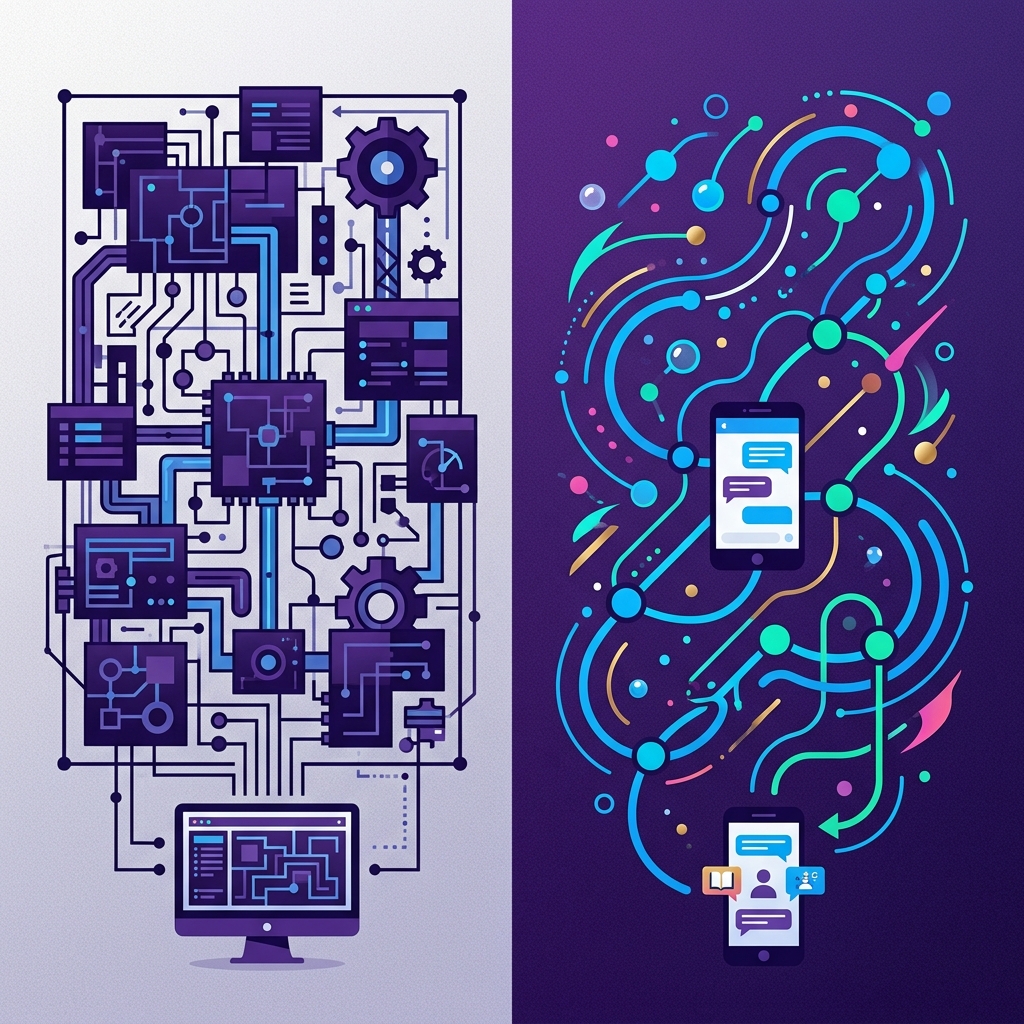
Leap10x takes a fundamentally different approach. Built specifically for frontline and deskless workers in India and Southeast Asia, Leap10x delivers training through WhatsApp - the channel these workers already use dozens of times a day. The platform focuses on microlearning, vernacular content delivery, and reaching workers who don't have laptops, company email addresses, or time for hour-long training sessions.
Both platforms solve real problems. But they solve very different problems for very different audiences. If you're an Indian enterprise evaluating training platforms for your frontline workforce - factory operators, delivery agents, retail staff, field sales teams, or warehouse workers - this comparison will help you make the right call.
For another platform comparison from our side, see our detailed 7taps vs Leap10x: Honest Microlearning Comparison (2026).
Where Docebo Excels
Enterprise-Grade LMS Architecture
Docebo is a full-featured learning management system. It handles everything from course authoring and content curation to certification tracking and compliance reporting. For organizations that need a centralized learning platform across multiple departments and use cases - employee onboarding, sales enablement, customer training, partner education - Docebo's multi-audience architecture is genuinely strong.
The platform supports SCORM 1.2, SCORM 2004, and xAPI, which means you can import third-party courseware and track detailed learner activity across systems. If your organization has invested in off-the-shelf compliance courses from vendors like LinkedIn Learning, Skillsoft, or Coursera for Business, Docebo integrates with them seamlessly through its Content Marketplace.
AI-Powered Personalization
Docebo's AI engine - Docebo Shape and its broader AI capabilities - powers content recommendations, auto-tagging, and adaptive learning paths. The system learns from user behavior and serves up relevant content based on role, skill gaps, and learning history. For knowledge workers consuming self-directed learning, this personalization layer is valuable.
Reporting and Analytics
Docebo offers robust reporting dashboards with customizable views, automated report scheduling, and integration with Salesforce for correlating learning data with business outcomes. L&D teams that need to demonstrate ROI to leadership will find the analytics suite comprehensive.
Global Scale
Docebo supports 40+ languages for the platform interface and has a strong presence across North America, Europe, and parts of APAC. It's built for organizations operating across multiple countries and regulatory environments.
Where Docebo Falls Short for India's Frontline
Desktop-First Design
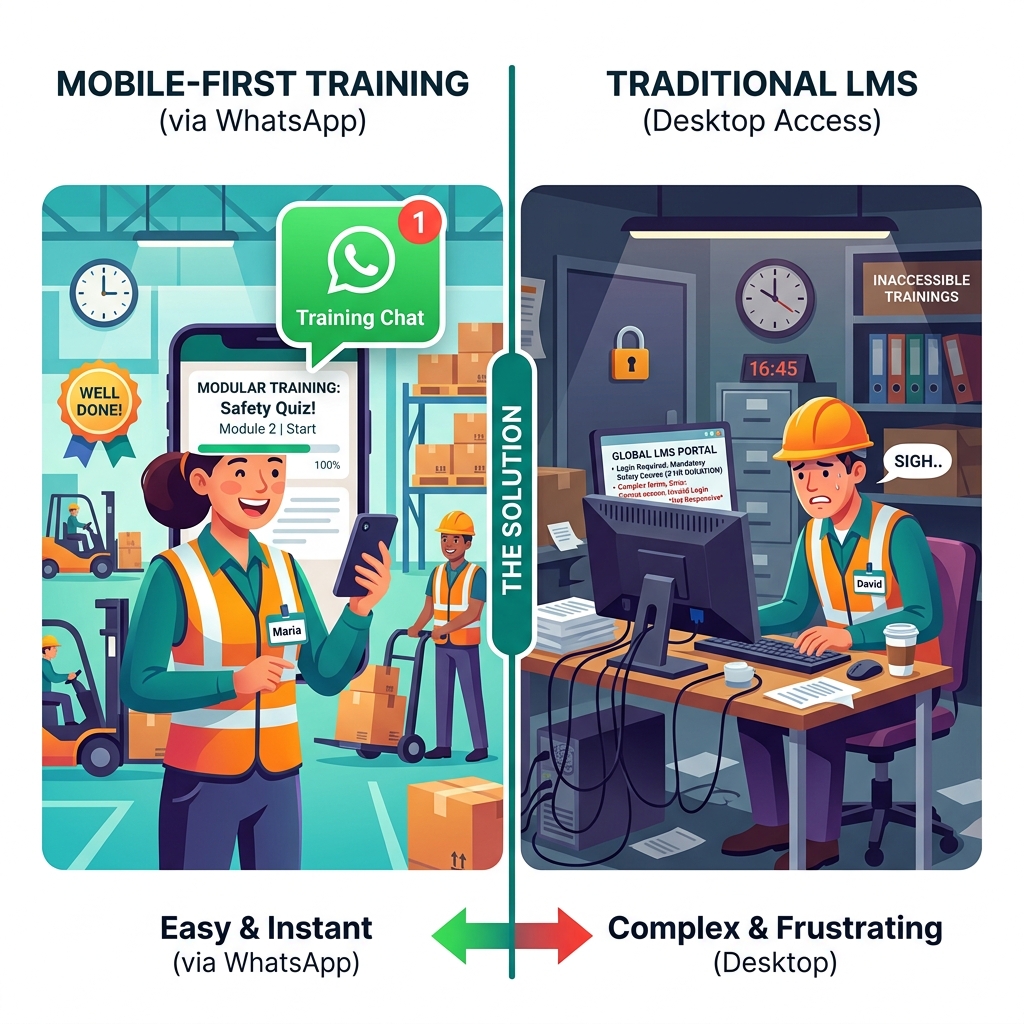
Docebo's platform is designed primarily for desktop and laptop users. While it offers a mobile app (Docebo Go), the core experience assumes learners have devices with reasonable screen sizes, stable internet connections, and the technical literacy to navigate an LMS interface.
This assumption breaks down for India's frontline workforce. Factory operators, delivery agents, and warehouse staff typically don't have company-issued laptops. Many don't have personal email addresses. Their primary computing device is an Android smartphone - often a budget model with limited storage and intermittent data connectivity.
A platform that requires downloading a dedicated app, creating login credentials, and navigating through course catalogs simply doesn't match how these workers interact with technology.
No WhatsApp-Native Delivery
India has over 500 million active WhatsApp users. For frontline workers, WhatsApp isn't just a messaging app - it's their primary digital interface. They receive work schedules on WhatsApp. They share photos of completed tasks on WhatsApp. They communicate with supervisors on WhatsApp.
Docebo doesn't deliver training through WhatsApp. This means you're asking workers to leave the app they use every hour to open a separate learning app they use once a week. The friction is real, and it shows up in completion rates.
For a deeper look at why WhatsApp delivery matters, check our WhatsApp-Based Training for Employees: Complete 2026 Guide.
Limited Vernacular Depth for Indian Languages
Docebo supports 40+ languages at the interface level. But supporting Hindi or Tamil in the navigation menu is different from delivering training content in the nuanced, contextual vernacular that frontline workers actually understand.
India's frontline workforce operates in 22+ scheduled languages. A line supervisor in a Gujarat auto-parts plant needs training in Gujarati. A recovery agent in rural Tamil Nadu needs content in Tamil with local context. Translation at the interface level doesn't solve the content comprehension problem.
Enterprise Pricing vs. Frontline Economics
Docebo's pricing is enterprise-oriented. While exact figures depend on contract terms, industry reports indicate minimum commitments starting around $25,000 annually with per-user pricing that assumes knowledge-worker usage patterns. For organizations training thousands of frontline workers on basic compliance, safety, or onboarding content, the per-user economics of an enterprise LMS don't always make sense.
Where Leap10x Fits
WhatsApp-Native Training Delivery
Leap10x delivers training directly through WhatsApp - no app downloads, no new credentials, no onboarding onto yet another platform. Workers receive training modules as WhatsApp messages: short videos, image cards, scenario-based questions, and quick quizzes. They tap through content in the same interface they use for everything else.
This eliminates the single biggest barrier to frontline training adoption: access. When training arrives in the channel workers already check 30+ times per day, completion rates rise dramatically.
Built for India's Language Reality
Leap10x auto-translates training content across Indian languages - Hindi, Tamil, Telugu, Marathi, Bengali, Kannada, Gujarati, Malayalam, and more. But it goes beyond translation. The platform supports vernacular context: local examples, regional scenarios, and culturally relevant references that make training feel like it was built for the learner, not translated at the last minute.
Microlearning by Design
Every training module on Leap10x is designed for 3-5 minute consumption. This matches the reality of frontline work - short breaks between tasks, a few minutes before shift start, a pause during lunch. The content format uses spaced repetition, delivering modules across multiple days to maximize retention rather than dumping everything in a single session.
Compliance-Ready for Indian Regulations
Leap10x is built with Indian regulatory requirements in mind - RBI compliance for BFSI, Factories Act safety training, POSH awareness, and industry-specific certifications. Assessment tracking, completion records, and audit trails are designed for the Indian compliance context.
Head-to-Head Comparison
When to Choose Docebo
Docebo is the right choice when:
- Your primary learners are knowledge workers with laptops and company email
- You need a single platform for employee training, customer education, and partner enablement
- Your content strategy relies heavily on third-party SCORM courses from established vendors
- You need deep integration with Salesforce, Workday, or SAP SuccessFactors
- Your compliance requirements are global, not India-specific
- You have a dedicated L&D team with bandwidth to manage a full LMS implementation
When to Choose Leap10x
Leap10x is the right choice when:
- Your primary learners are frontline, deskless, or blue-collar workers
- Your workforce is in India or Southeast Asia, operating across multiple regional languages
- Workers don't have laptops, company email, or time for hour-long courses
- You need training delivered through WhatsApp - the channel your workers already live in
- Your compliance needs are India-specific: RBI, Factories Act, POSH, SEBI
- You need to go from zero to live training in days, not months
- You want microlearning that fits into the natural breaks of a frontline work shift
The Bottom Line
Docebo and Leap10x aren't competing for the same buyer. If you're building a global learning ecosystem for a knowledge-worker-heavy organization, Docebo brings enterprise LMS capabilities that are hard to beat.
But if your challenge is reaching 500 factory operators in Gujarat, 1,000 delivery agents across Tamil Nadu, or 2,000 retail associates in stores from Delhi to Kochi - and you need them to actually complete training, understand it in their language, and apply it on the job - that's a different problem entirely.
For India's frontline workforce, the question isn't which platform has more features. It's which platform actually reaches the people you need to train.
Our earlier piece on Why Your LMS Will Never Solve Frontline Training digs deeper into why traditional LMS architecture fails for deskless workers.
Ready to see what WhatsApp-native training looks like for your frontline team? Book a demo with Leap10x and deliver your first training in days, not months.