Microlearning for Manufacturing Teams: Training the Factory Floor Without Downtime
Quick answer
Factory floors run on tight schedules. Every minute a worker spends in a classroom is a minute not spent on the production line.
Manufacturing Training Has a Fundamental Problem
Factory floors run on tight schedules. Every minute a worker spends in a classroom is a minute not spent on the production line. This creates a brutal trade-off: train your workforce properly and lose productivity, or skip training and risk safety incidents, quality defects, and compliance failures.
Most manufacturing companies have tried to solve this with annual training days - pulling workers off the line for eight-hour sessions packed with safety procedures, machine operations, and regulatory updates. The result? Workers retain about 20% of what they learned, and they resent losing a day's production bonus.
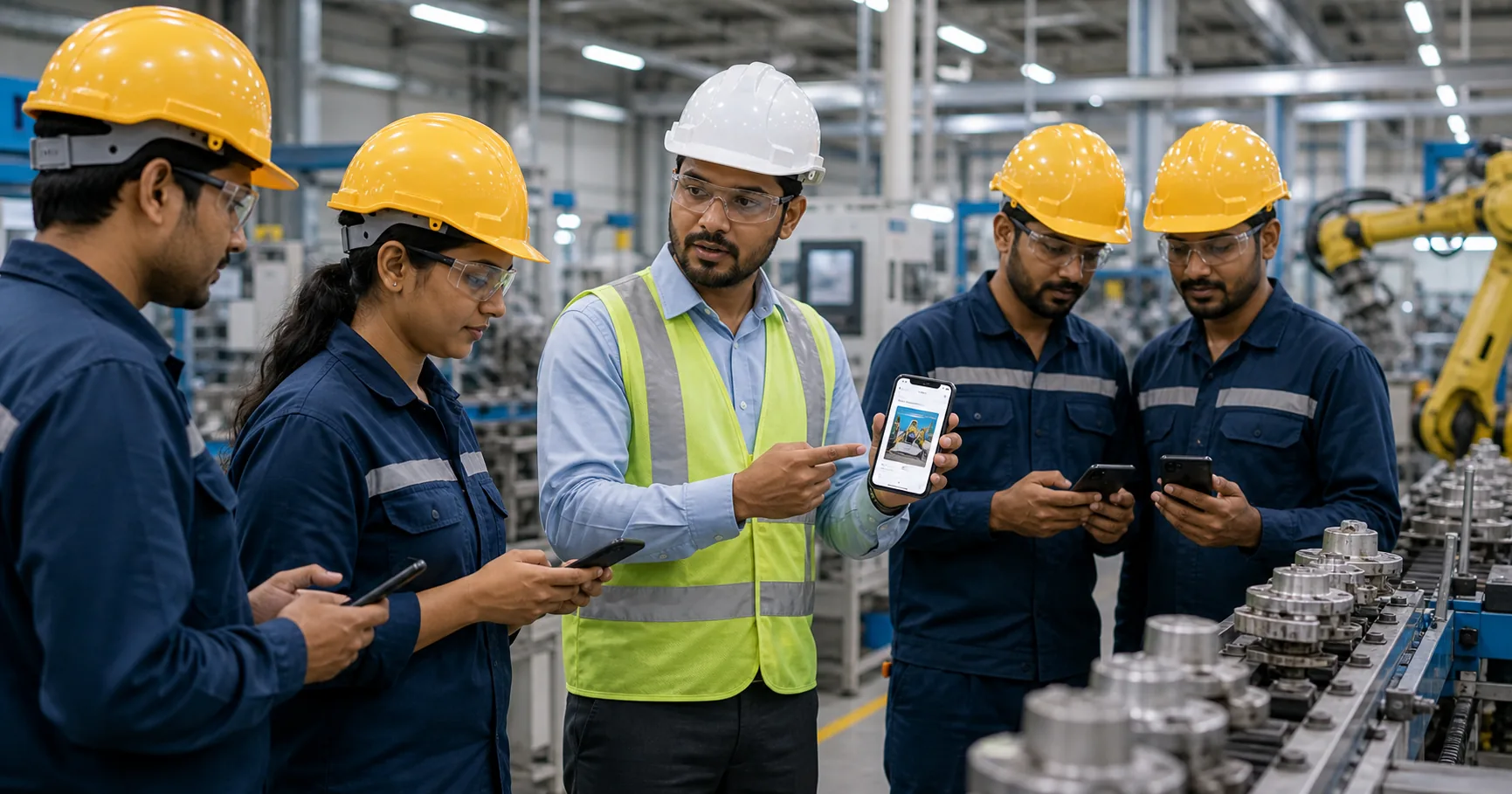
Microlearning offers a different model: train workers in the flow of work, five minutes at a time, on the devices they already carry.
Why Microlearning Fits Manufacturing Better Than Any Other Approach
Workers do not have desks or computers. Manufacturing workers spend their shifts on their feet, operating machinery, moving materials, and performing physical tasks. Training must reach them on their phones - not on a laptop they do not have.
Shift patterns make scheduling impossible. With rotating shifts, overtime, and variable schedules, finding a time when everyone can attend training is like solving a puzzle with missing pieces. Microlearning is asynchronous - workers complete it when they have a few free minutes.
Safety training needs constant reinforcement. A one-time safety session does not prevent accidents six months later. Microlearning delivers regular safety reminders that keep protocols top of mind.
Multilingual workforce. Indian manufacturing facilities often employ workers speaking five or more different languages. Microlearning platforms with vernacular support ensure every worker understands safety procedures in their native language.
High turnover demands fast onboarding. Contract workers and seasonal hires cycle in and out frequently. Microlearning accelerates their ramp-up without requiring dedicated trainer time for each new batch.
Use Cases That Deliver Measurable Results
Safety Protocol Training
A leading Indian manufacturer used microlearning to train factory staff on machine safety and lockout/tagout procedures. The result: 40% reduction in safety incidents and 30% improvement in operational efficiency. Workers received two-minute modules on their phones before each shift, reinforcing critical procedures when it mattered most.
SOP Updates and New Machine Training
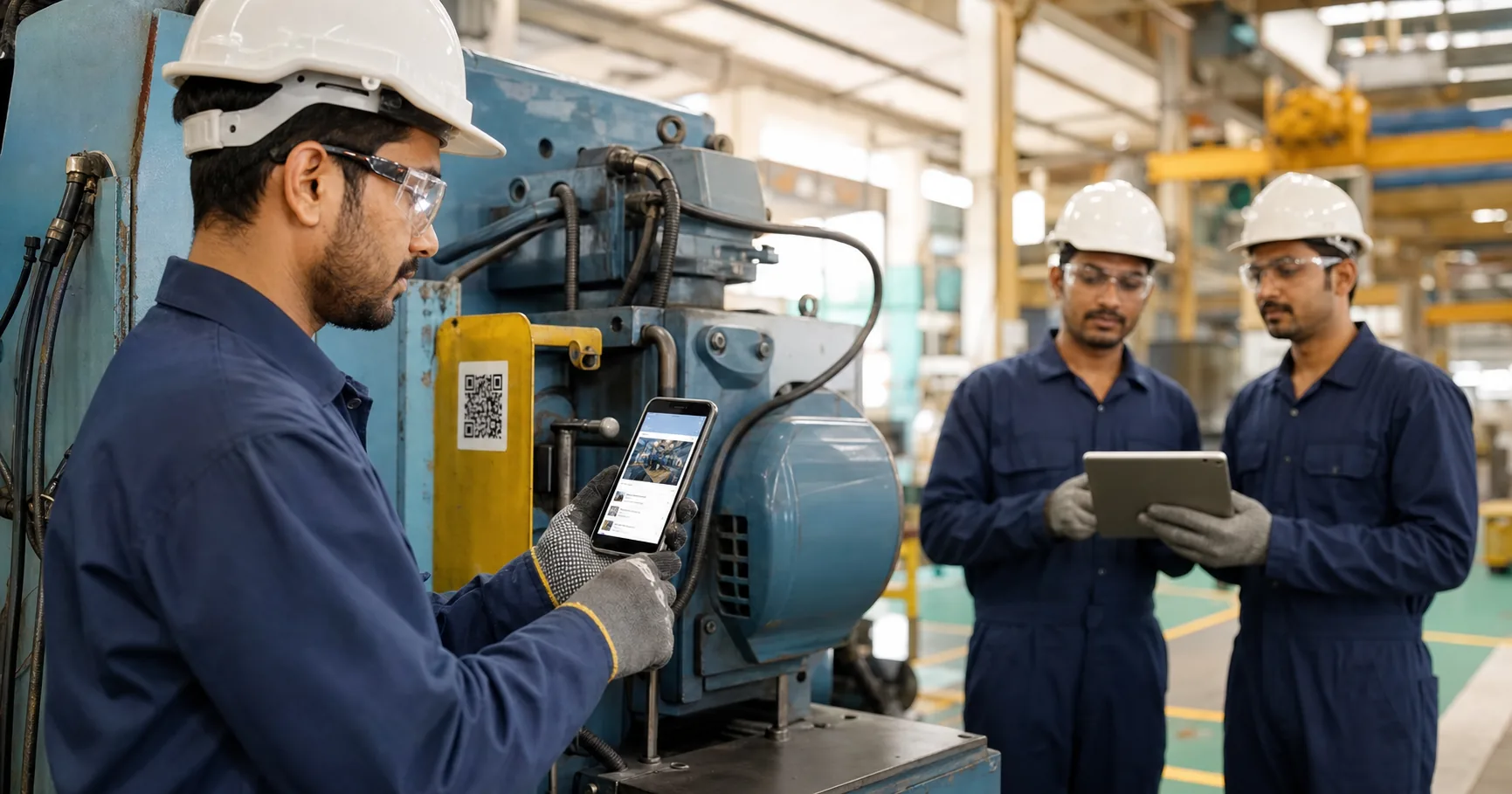
When a new machine arrives on the floor or a process changes, workers need to know immediately. Microlearning modules can be created and deployed within hours - not the weeks required for classroom training. Workers scan a QR code on the machine and receive a step-by-step micro-module on their phone.
Compliance and Regulatory Training
ISO certifications, environmental regulations, and workplace safety laws require documented training. Microlearning platforms provide completion tracking, quiz scores, and audit-ready reports that satisfy regulatory requirements without the overhead of classroom attendance records.
Quality Standards
Defect reduction starts with worker knowledge. Short modules on quality checkpoints, common defects, and inspection procedures - delivered in the worker's language - reduce errors on the production line.
Implementing Microlearning on the Factory Floor
Step 1 - Convert Existing Materials
Your factory already has SOPs, safety manuals, and training binders. AI-powered platforms can convert these into bite-sized modules automatically. Upload a PDF; get a micro-course.
Step 2 - Choose a No-App Delivery Channel
Factory workers are not going to download a training app. They barely have storage space for WhatsApp. Deliver training via WhatsApp, SMS, or QR codes placed at workstations.
Step 3 - Align with Shift Schedules
Push training modules at specific times - before shift start, during scheduled breaks, or after shift end. Avoid interrupting production flow.
Step 4 - Make It Visual
Factory workers learn best from demonstrations, not text. Use short videos, diagrams, and step-by-step images. A 90-second video showing the correct way to operate a press brake is worth more than a ten-page manual.
Step 5 - Track and Report
Use completion dashboards to ensure every worker has completed mandatory safety training. Flag non-completions for supervisor follow-up. Generate reports for audits and compliance reviews.
The Business Case for Manufacturing Microlearning
| Metric | Before Microlearning | After Microlearning |
|---|---|---|
| Safety incident rate | Baseline | 30-40% reduction |
| Onboarding time | 2-4 weeks | 1-2 weeks |
| Training completion rate | 40-60% | 80-95% |
| Annual training cost per worker | High (classroom + downtime) | 40-60% lower |
| Compliance audit readiness | Manual records | Automated tracking |
These numbers are not hypothetical. They represent real outcomes from manufacturing companies that have made the switch.
Overcoming Resistance on the Factory Floor
"Workers will not use their phones for training." They already use their phones for WhatsApp, YouTube, and social media. Training delivered through these channels does not feel like training - it feels natural.
"Union regulations limit phone use on the floor." Microlearning can be completed before or after shifts, or during designated breaks. It does not require phone use during active production.
"Our supervisors prefer classroom training." Offer supervisors real-time completion dashboards that give them more visibility into worker knowledge than a classroom sign-in sheet ever could.
"We cannot trust AI-generated content." Every AI-generated module should go through L&D review before deployment. The AI accelerates creation; humans ensure accuracy.
How Leap10x Supports Manufacturing Training
Leap10x was built for exactly this scenario: delivering bite-sized training to frontline workers who do not have laptops, company email, or time for classroom sessions.
Upload your SOPs, safety manuals, and process documents. Leap10x AI converts them into micro-courses in 70+ languages. Push them to workers via WhatsApp or QR codes. Track completion in real time.
Companies like Siemens and Tata Electronics already use Leap10x for factory floor training.
See how Leap10x delivers manufacturing training →
Start with your highest-risk area - safety training. Convert one critical SOP into a micro-module, push it to one team, and measure the impact. Scale from there.
Microlearning
Turn your SOPs into 3-minute modules
Upload a PDF, deck, or video and Leap10x's AI builds micro-modules with quizzes and spaced-repetition schedules — delivered where your frontline already is.