Best Microlearning for Frontline Maintenance Teams
Quick answer
Maintenance technicians are among the most skilled workers on any factory floor or facility.
Maintenance Teams Have Unique Training Challenges
Maintenance technicians are among the most skilled workers on any factory floor or facility. They keep machines running, troubleshoot breakdowns, and perform preventive maintenance that prevents costly downtime. Yet their training is often the most neglected.
The challenge is structural. Maintenance teams are small, spread across shifts, and constantly responding to urgent calls. Pulling a technician off the floor for a training session means one less person available when a critical machine goes down.
Add to this the constant evolution of equipment. New machines arrive with new procedures. Software updates change control interfaces. Regulatory requirements shift. Maintenance technicians need continuous training - but their schedules make traditional approaches impractical.
Why Microlearning Works for Maintenance
Just-in-time access. A technician troubleshooting a machine does not need a 40-page manual. They need a two-minute video showing the specific procedure. Microlearning delivers exactly that - accessible from their phone at the point of need.
Equipment-specific content. Each machine has unique maintenance procedures. Micro-modules tagged to specific equipment IDs let technicians pull up exactly what they need, when they need it.
Safety reinforcement. Maintenance work involves electrical hazards, confined spaces, lockout/tagout procedures, and heavy equipment. Regular safety micro-modules keep these protocols top of mind.
Cross-training efficiency. When a senior technician retires, their knowledge often leaves with them. Micro-modules capturing equipment-specific procedures preserve institutional knowledge and enable cross-training.
Compliance documentation. Maintenance certifications and safety training require documentation. Microlearning platforms automatically track completion, generating audit-ready reports.
Core Training Areas for Maintenance Teams
Preventive Maintenance Procedures
Step-by-step micro-modules for each equipment type covering inspection checklists, lubrication schedules, filter replacements, and calibration procedures.
Troubleshooting Guides
Decision-tree style micro-modules: "Machine vibrating? Check these three things first." Visual guides with annotated photos of common failure points.
Safety Protocols
Lockout/tagout procedures, electrical safety, confined space entry, fall protection, and hot work permits. Delivered weekly to keep procedures sharp.
New Equipment Orientation
When new machines arrive, deploy micro-modules covering basic operation, daily maintenance requirements, and common issues - before the equipment goes into production.
Software and Control System Updates
Quick modules walking technicians through updated HMI screens, PLC changes, and control system modifications. Include screenshots and step-by-step walkthroughs.
Implementation for Maintenance Teams
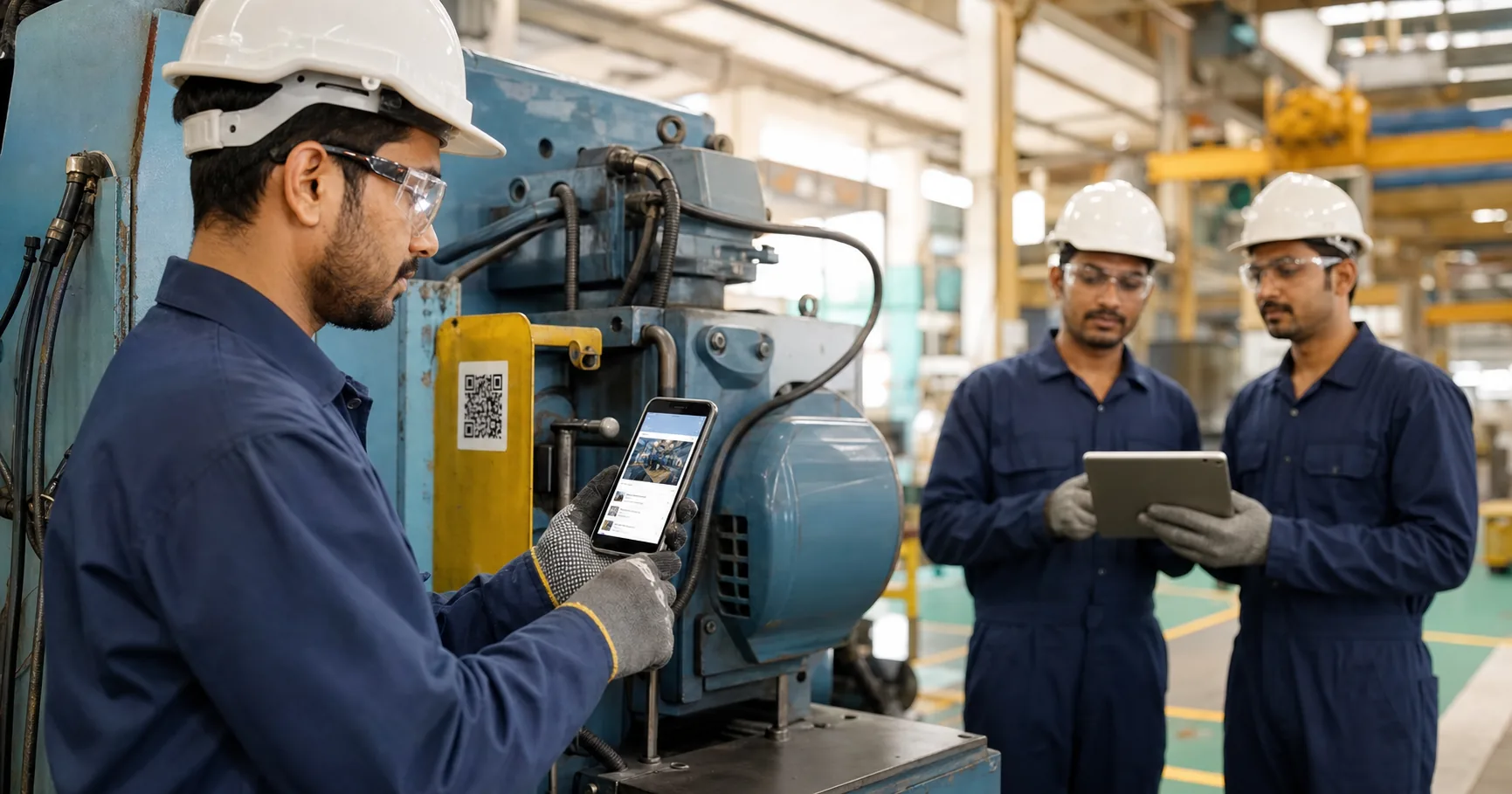
QR codes on equipment. Place QR codes on each machine. When scanned, the technician receives the relevant maintenance micro-module on their phone. This turns training into an on-demand resource.
Pre-shift modules. Push one safety or procedure module before each shift. Three minutes of focused training that primes the technician for the day's work.
Post-incident training. After a breakdown or safety incident, immediately deploy relevant micro-modules to the entire maintenance team. Turn incidents into learning opportunities.
Skill gap assessments. Use quizzes to identify where each technician's knowledge is strong and where it needs reinforcement. Assign targeted modules based on individual gaps.
Preserving Institutional Knowledge
One of the most valuable applications of microlearning for maintenance teams is knowledge capture. When experienced technicians retire, decades of troubleshooting knowledge disappear.
Record short video modules of senior technicians explaining their approach to common problems. Capture the "tricks" that are not in any manual. Store these as searchable micro-modules that new technicians can access anytime.
This turns individual expertise into organizational knowledge - and protects your operation from the inevitable knowledge drain of workforce turnover.
Choosing a Platform for Maintenance Teams
Look for:
- QR code support for equipment-based access
- Video hosting for procedure demonstrations
- Offline access for facilities with poor connectivity
- Searchable module library for just-in-time troubleshooting
- Completion tracking for compliance documentation
Deliver Maintenance Training with Leap10x
Leap10x converts your existing maintenance manuals, SOPs, and procedure documents into bite-sized training modules delivered via WhatsApp or QR codes. Technicians access what they need, when they need it, in their preferred language.
See how Leap10x supports maintenance team training →
Your maintenance team's knowledge is your most valuable asset. Capture it, distribute it, and reinforce it with microlearning.
Frontline training
Training software built for deskless teams
Onboarding, SOPs, safety refreshers, and compliance evidence for workers with no corporate email and no company device — tracked by site, role, and shift.