How to Build Multilingual Training for India's Factory Floor
One Factory, Five Languages, Zero Training Consistency
Here's a scenario that plays out across Indian manufacturing every day: A plant in Pune employs 800 workers. The production line operators are predominantly Marathi-speaking. The maintenance team includes migrant workers from Bihar and UP who speak Hindi and Bhojpuri. The quality inspectors are a mix of Telugu and Kannada speakers who relocated from Andhra Pradesh and Karnataka. The logistics staff includes workers from Odisha who speak Odia.
The safety training manual is in English. The supervisor conducts training in Hindi. Half the workforce partially understands. The other half nods along.
When a safety incident happens - and it will - the root cause investigation reveals what everyone already knew: the worker didn't fully understand the procedure because it wasn't in their language.
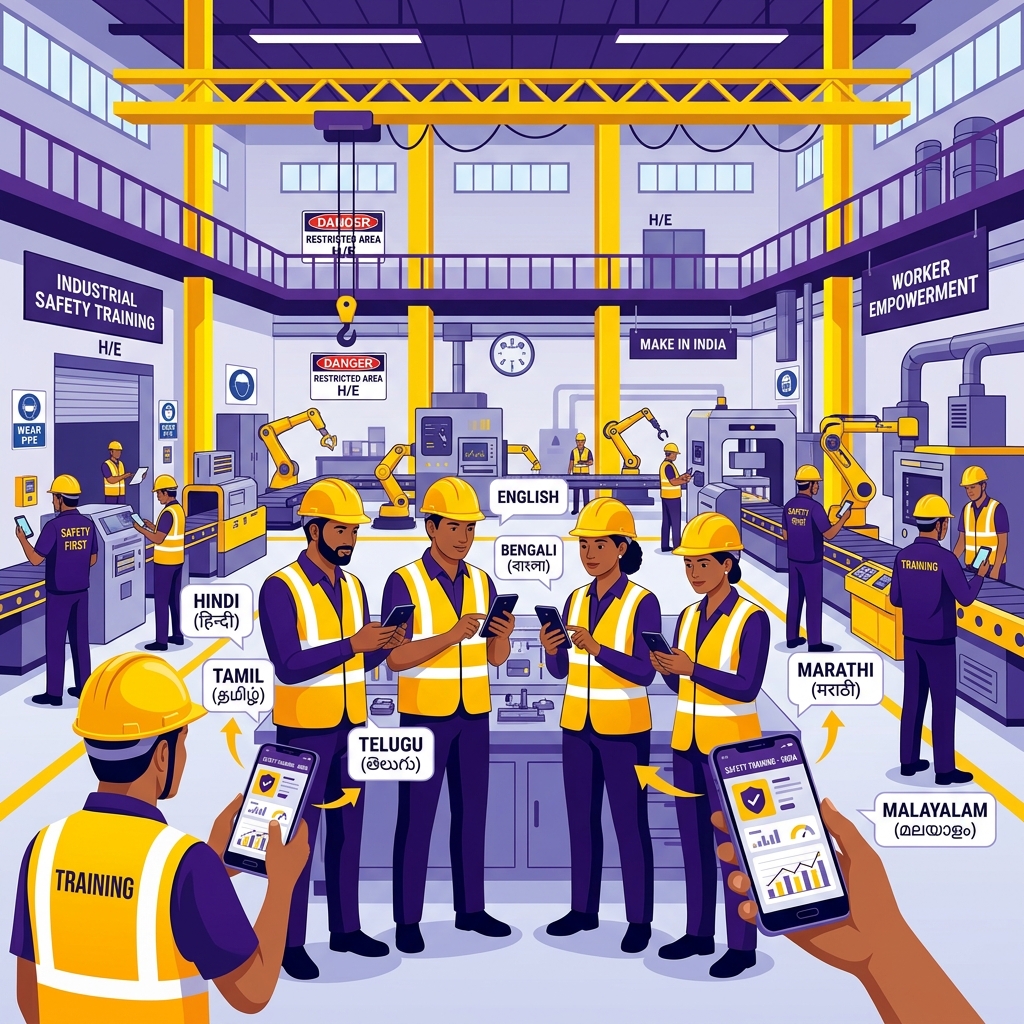
India's manufacturing workforce is linguistically diverse in a way that no other major manufacturing economy matches. The country recognizes 22 scheduled languages, and factory floors in industrial hubs like Pune, Chennai, Bengaluru, Ahmedabad, and NCR regularly employ workers from 5-10 different language backgrounds.
Building multilingual training used to mean hiring translators, managing multiple content versions, and spending months on each training update. In 2026, AI-powered translation and WhatsApp-native delivery have made multilingual training both affordable and fast. This guide shows you how.
For a broader perspective on vernacular training principles, see our Vernacular Training for India's Frontline: Why Regional Languages Beat English-Only Programs.
The True Cost of Language Mismatches in Manufacturing
Before building a solution, understand what language gaps actually cost:
Safety Incidents
Manufacturing safety depends on workers understanding procedures precisely. A lockout-tagout procedure misunderstood because it was delivered in an unfamiliar language creates a life-threatening risk. India records over 48,000 workplace fatalities annually according to ILO estimates. While not all are attributable to training gaps, the correlation between comprehension and compliance is well-established.
Quality Defects
Quality standards require exact adherence to specifications. When a machine operator doesn't fully understand the tolerance limits because the SOP was in English and they think in Tamil, the result is production defects that affect yields, waste rates, and customer satisfaction.
Compliance Violations
The Factories Act, 1948 requires documented safety training. ISO 9001 and IATF 16949 require documented procedures that workers can demonstrate understanding of during audits. If your training records show English-only delivery to a workforce that doesn't speak English, you have a compliance gap that auditors will find.
Onboarding Delays
New hires who receive onboarding training in an unfamiliar language take longer to reach productive capacity. They rely more heavily on experienced workers for informal guidance, which creates inconsistency and distracts productive workers from their own tasks.
For the compliance angle on manufacturing training, see our Compliance Training for Manufacturing Workers: 2026 Guide.
The Old Way: Manual Translation (Expensive and Slow)
The traditional approach to multilingual manufacturing training involves:
- Creating training content in English (or Hindi)
- Hiring professional translators for each target language
- Reviewing translations with bilingual subject matter experts
- Formatting translated content into training materials
- Managing version control across all language versions
- Repeating the entire process for every content update
This workflow is brutally slow and expensive. Translating a single 20-page safety manual into 5 languages can cost INR 2-4 lakhs and take 4-6 weeks. Multiply by the number of procedures, compliance modules, and product training documents in a typical plant, and you're looking at lakhs in annual translation costs with months of lead time for any update.
The result: most manufacturers don't translate training content. They deliver in English or Hindi and hope for the best. Workers who don't understand simply learn from watching others - perpetuating unsafe shortcuts and quality workarounds that become embedded in the culture.
The New Way: AI Translation + WhatsApp Delivery (Fast and Affordable)
How AI Translation Works for Training Content
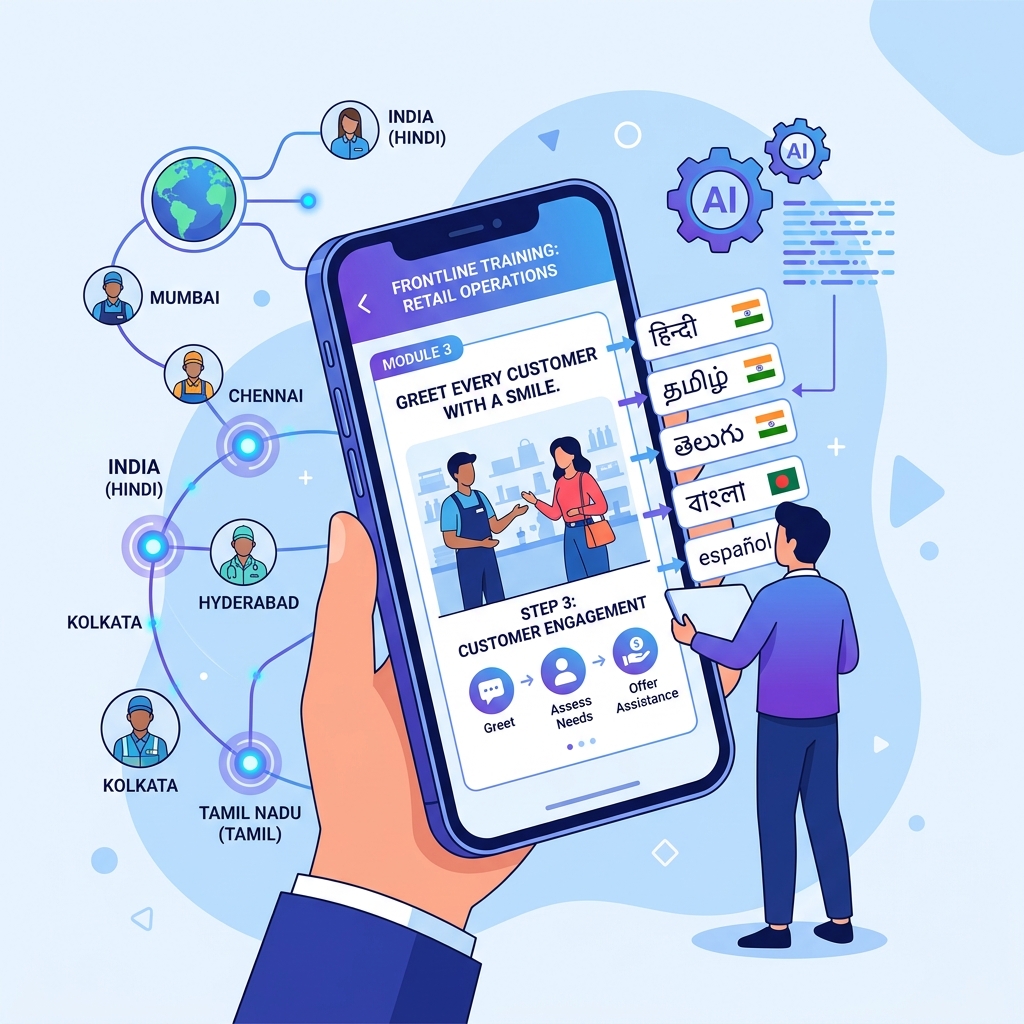
Modern AI translation tools - powered by models trained specifically on Indian languages (like Google's MuRIL and the government's Bhashini platform) - produce translations that are accurate enough for training content with far less cost and time than manual translation.
The workflow changes dramatically:
- Create training content once in your base language
- AI auto-translates into all required Indian languages within minutes
- A bilingual reviewer (internal or external) checks critical content - particularly safety procedures, regulatory terms, and technical vocabulary
- Approved content is deployed to workers in their preferred language
- Updates follow the same pipeline: change the base content, auto-translate, review, deploy
The economics shift from "lakhs per language" to a fraction of that cost. Translation time drops from weeks to hours.
Why WhatsApp Delivery Completes the Equation
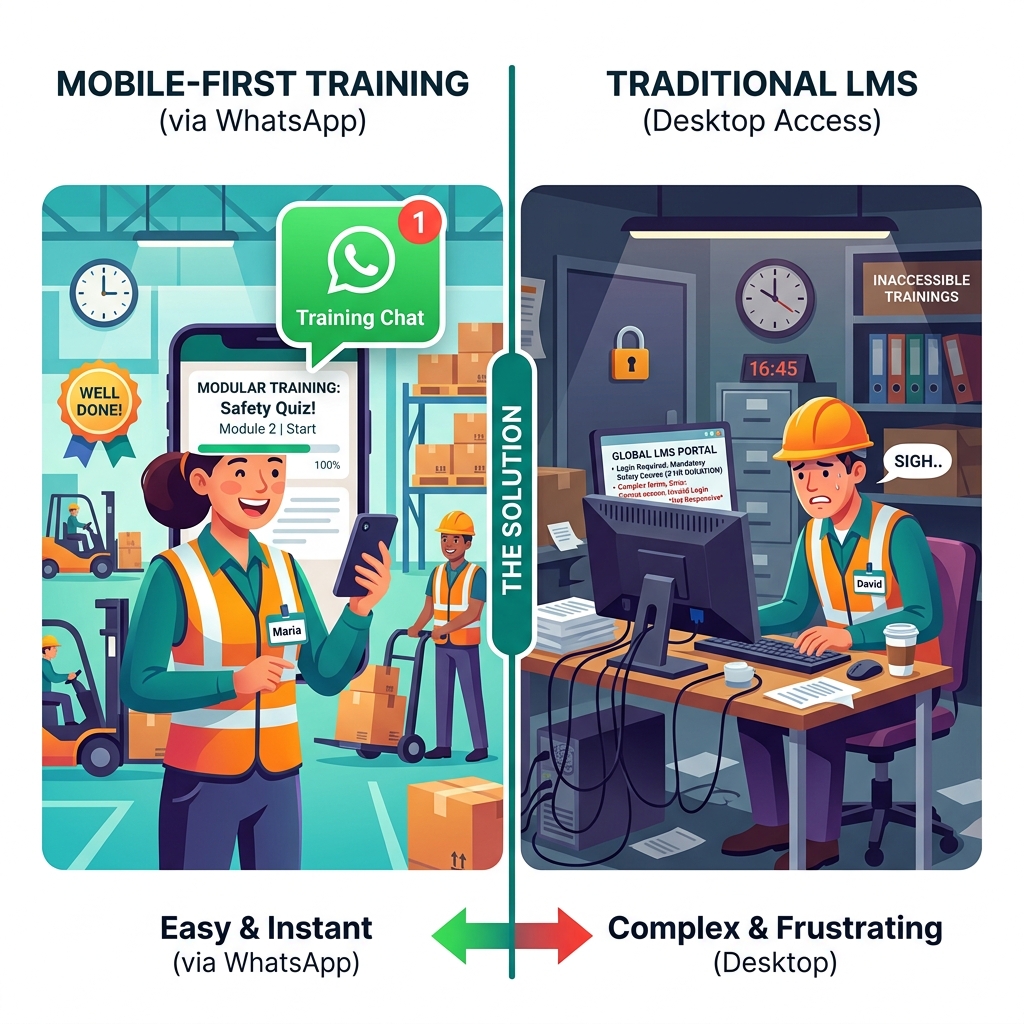
Translating content is only half the challenge. Delivering it to workers on the factory floor is the other half. A translated safety manual sitting in a SharePoint folder doesn't help a worker on the line.
WhatsApp delivery puts training in the worker's language, on their phone, accessible at the moment they need it. A Marathi-speaking machine operator receives the CNC setup procedure in Marathi on WhatsApp. They can reference it while standing at the machine. They can replay the video in their break. They can take the assessment quiz on their commute home.
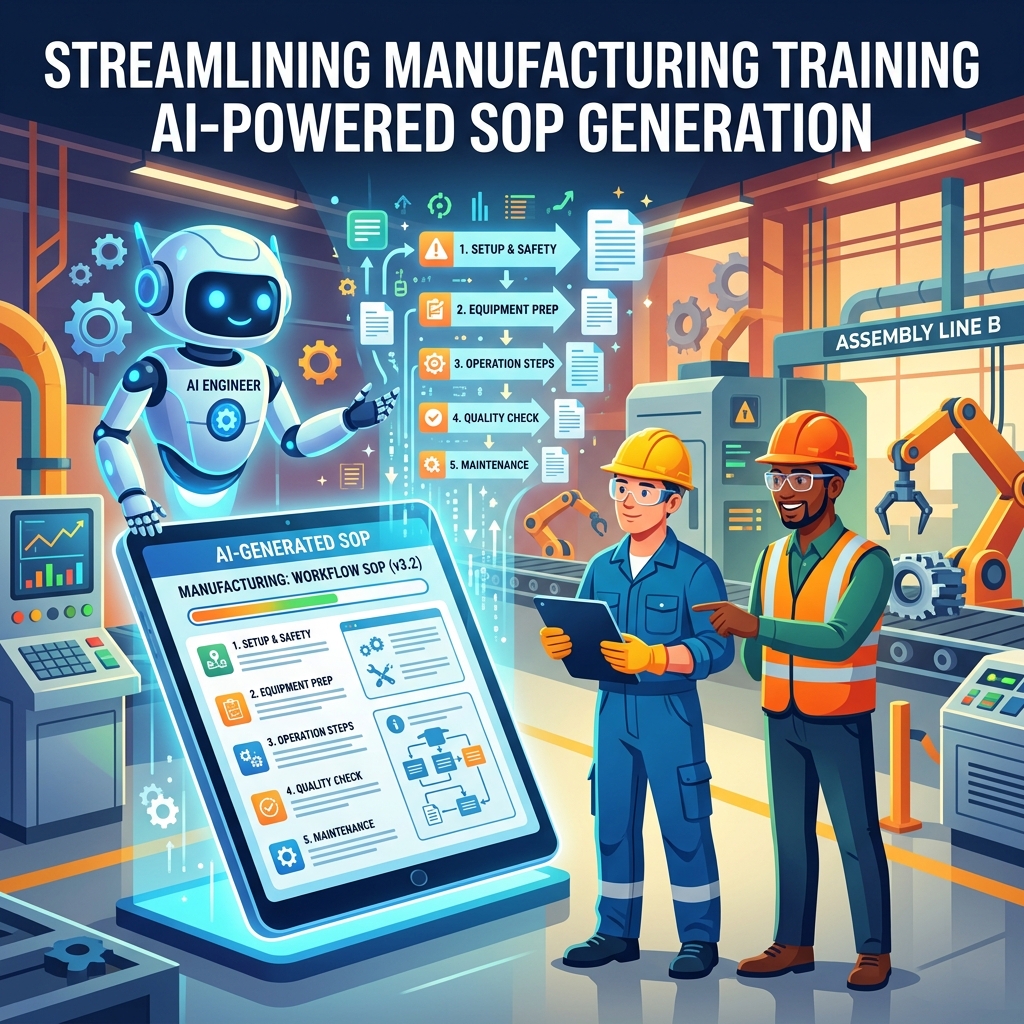
For a detailed breakdown of how to convert SOPs to training content, see our AI-Generated SOPs for Manufacturing.
Building Your Multilingual Training Program: Step by Step
Step 1: Map Your Workforce Language Profile
Survey every plant location. For each, document:
- Primary language of the local workforce
- Secondary languages (migrant worker populations)
- Percentage of workers comfortable with Hindi (your likely bridge language)
- Percentage comfortable with English (likely very low on the production floor)
Most plants will need 2-4 languages. A plant in Chennai might need Tamil, Telugu, and Hindi. A plant in Pune might need Marathi, Hindi, and Telugu. Knowing your specific language mix prevents wasted effort translating into languages nobody on your floor speaks.
Step 2: Prioritize Content for Translation
You don't need to translate everything on Day 1. Start with:
- Safety-critical SOPs: Lockout-tagout, chemical handling, PPE requirements, emergency procedures
- Onboarding essentials: Plant layout, shift procedures, reporting structure, basic machine orientation
- Compliance modules: Mandatory safety training, POSH awareness, environmental compliance
These are the content types where comprehension failure has the highest consequences.
Step 3: Build a Base Content Library
Create all training content as microlearning modules (3-5 minutes each) in your base language. Structure each module with:
- Visual-first design (diagrams, annotated photos, short videos)
- Simple sentence structure (easier for AI to translate accurately)
- Technical terms with consistent usage (create a glossary for the AI)
- Scenario-based assessments (situation-based questions translate better than abstract concepts)
Step 4: Implement AI Translation with Human Review
AI translation produces first drafts instantly. But for safety-critical manufacturing content, human review is non-negotiable. Establish a review process:
- AI translates the base content into target languages
- A bilingual reviewer (supervisor, shift lead, or external reviewer) checks safety terms, technical vocabulary, and procedural accuracy
- Flagged corrections feed back into the AI model for continuous improvement
- Approved content is published to the training platform
The human review step adds modest cost but prevents the potentially catastrophic consequences of a mistranslated safety procedure.
Step 5: Deploy via WhatsApp with Language Preferences
Each worker's profile includes their preferred language. When a new training module is published, the system automatically delivers the correct language version to each worker. A plant with 800 workers across 4 languages receives 4 versions of the same module - simultaneously, automatically.
Workers don't select their language each time. The system knows their preference and delivers accordingly. This eliminates friction and ensures every worker receives comprehensible content.
Step 6: Measure Language-Specific Training Effectiveness
Track key metrics by language:
- Assessment scores by language: Are some language translations producing lower scores? This signals translation quality issues.
- Completion rates by language: Similar completion rates across languages suggests equitable content quality.
- Safety incident correlation: Do locations with better-matched language training show fewer incidents?
- Time-to-completion: If one language group takes significantly longer, the translation may need simplification.
Budget Reality: What This Actually Costs
For a manufacturing plant with 1,000 workers across 4 languages:
Old model (manual translation):
- Initial translation of 50 key training modules: INR 8-15 lakhs
- Annual updates and new content: INR 3-5 lakhs
- Lead time per training update: 4-8 weeks
New model (AI translation + WhatsApp delivery):
- Platform cost with AI translation: Fraction of manual costs
- Annual content updates: Included in platform
- Lead time per training update: Hours to days
- Bonus: Built-in assessment tracking and compliance documentation
The cost savings are significant, but the speed advantage is transformative. When a safety procedure changes on Monday, every worker on every line in every language has the updated training by Tuesday.
The Bottom Line
India's factory floor speaks 20+ languages. Training programs that ignore this reality aren't just ineffective - they're dangerous and non-compliant.
AI-powered translation has eliminated the cost barrier. WhatsApp delivery has eliminated the access barrier. What remains is the decision barrier: will your plant invest in multilingual training that every worker understands, or continue hoping that Hindi-and-English delivery is "good enough"?
The safety data, quality data, and compliance record will eventually answer that question. Better to answer it proactively.
Ready to train every worker on your factory floor - in their language, on their phone? Book a demo with Leap10x - AI-powered multilingual training delivered through WhatsApp, from safety SOPs to compliance modules.