How India’s Top Retailers Use Microlearning to Cut Store-Level Attrition by 30%
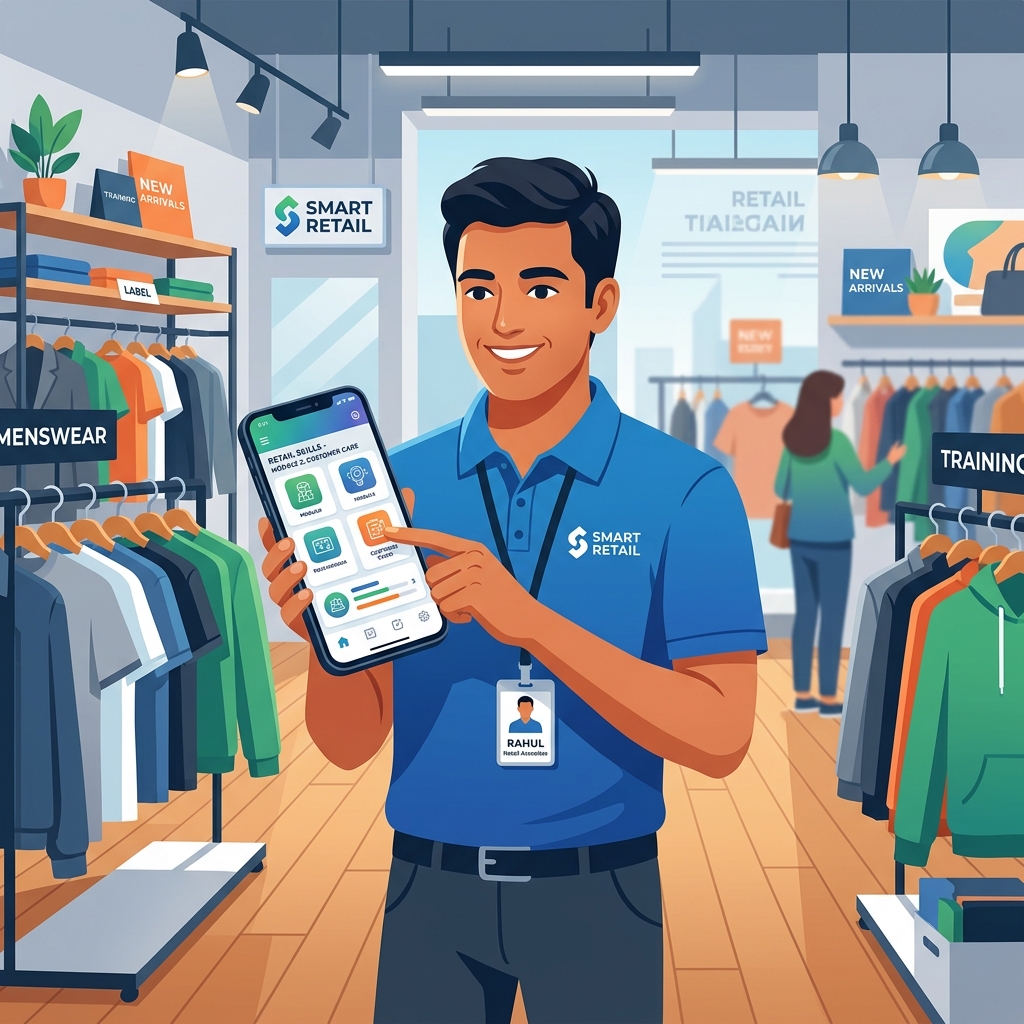
India's organized retail sector is growing at 25-30% annually. New stores are opening across tier-1 through tier-4 cities. Revenue is climbing. But beneath the growth headline sits a problem that erodes profitability faster than any competitor: frontline attrition.
Annual turnover among store-level retail employees in India ranges from 60% to over 100% in some segments. Every departure triggers a costly cycle - recruiting, onboarding, training, and the productivity dip during the learning curve of the replacement.
The cost per replacement varies by role, but conservative estimates put it at 30-50% of the annual salary. For a retail chain with 5,000 stores and 40,000 employees, losing even 50% annually means replacing 20,000 workers per year - at a total cost running into hundreds of crores.
But some retailers are breaking this pattern. They're using microlearning not just as a training tool, but as a retention strategy - and they're seeing attrition drop by 25-35% within the first year.
Why Retail Workers Leave (and It's Not Just About Pay)
Feeling unprepared and overwhelmed: New hires who don't receive adequate training feel lost. Studies show 20% of turnover happens in the first 45 days.
No visible career path: Store associates who see no connection between their current role and future growth leave when competitors offer ₹500 more.
Poor manager relationships: The store manager is the single biggest influence on retention. Workers leave the manager - not the company.
Inconsistent onboarding: A flagship store in Mumbai delivers structured training. A smaller store in Nagpur provides a quick walkthrough and expects the rest to figure itself out.
Lack of recognition: Workers whose performance isn't tracked, acknowledged, or rewarded disengage gradually. Disengagement precedes attrition.
How Microlearning Addresses Retail Attrition at Its Root
Solving the "Day 1 Anxiety" Problem
Microlearning transforms onboarding from a one-time session into a structured 30-60-90 day journey:
Week 1: Daily micro-modules covering store layout, POS basics, greeting customers, company values - 3-5 minutes each, delivered via WhatsApp.
Weeks 2-4: Product knowledge modules specific to the worker's section. Scenario-based quizzes simulating customer interactions.
Month 2-3: Advanced modules on upselling, handling returns, loss prevention. The worker builds competence and confidence incrementally.
Creating Visible Progress and Growth Paths
Workers see completion badges, skill levels, and leaderboard positions. When a store associate completes 50 micro-modules over 6 months, they've built a portfolio mapping to the next role. Workers who engage with ongoing microlearning are 2-3x more likely to stay beyond 12 months.
Empowering Store Managers as Coaches
Microlearning data shows managers exactly which team members are engaged, falling behind, or struggling with specific topics. This transforms the manager's role from policing compliance to coaching development.
Delivering Consistent Training Across Every Location
WhatsApp-based microlearning ensures every store delivers the same quality of training automatically. The content is centrally created and pushed to every worker based on role and location.
Building Belonging Through Vernacular Content
When a retail associate in Tamil Nadu receives training in Tamil with locally relevant examples, they feel seen. AI-powered content creation makes this scalable across 8-10 languages simultaneously.
The Numbers: What Microlearning-Driven Retention Looks Like
- 25-35% reduction in first-year attrition
- 40-50% faster onboarding - new hires reach productivity benchmarks weeks earlier
- 85-95% training completion rates - compared to 20-30% for traditional eLearning
- 15-20% improvement in customer satisfaction scores
- Measurable reduction in inventory shrinkage
Building Your Retail Attrition Reduction Program
Step 1: Analyze Where Attrition Is Highest
Break data by tenure, location, role, and hiring source.
Step 2: Design a 90-Day Onboarding Journey
Map micro-modules delivered 3-5 times per week. Front-load practical skills.
Step 3: Add Ongoing Product and Skills Training
New product launches, seasonal selling techniques, compliance refreshers - 2-3 modules per week after onboarding.
Step 4: Give Managers Retention Data
Workers who stop engaging with training in Week 3 are likely to leave by Week 6. Early intervention saves them.
Step 5: Measure Training Impact Against Attrition
Track attrition rates alongside training metrics to demonstrate ROI.
Training Isn't a Cost Center - It's a Retention Strategy
When a store associate feels prepared, recognized, and growing, ₹500 more from a competitor isn't enough to make them leave. That's the real ROI of effective training.
CTA: Ready to make training your strongest retention tool? Start a free trial with Leap10x and see how India's leading retailers train - and retain - their frontline teams.