Adaptive Microlearning: How AI Personalizes Bite-Sized Training for Every Frontline Worker
A pharmaceutical sales representative in Mumbai and a warehouse loader in Lucknow both need safety training. But their comprehension levels, prior knowledge, preferred languages, and learning speeds are completely different. Treating them identically - same content, same pace, same format - is the educational equivalent of giving everyone the same prescription regardless of their symptoms.
This is the fundamental limitation of standard microlearning. It's better than hour-long classroom sessions, but it still assumes every worker needs the same content in the same order. Adaptive microlearning fixes this by using AI to personalize what each worker sees, when they see it, and how it's reinforced.
What Makes Microlearning "Adaptive"?
Standard microlearning delivers the same bite-sized modules to everyone in a pre-set sequence. Adaptive microlearning uses data and AI to customize three dimensions:
Content selection - The system identifies what each worker already knows and what they struggle with, then serves modules that address actual gaps rather than repeating mastered material.
Pacing and sequencing - A worker who aced the safety basics gets advanced scenarios immediately. A worker who missed fundamental concepts gets reinforcement before moving forward.
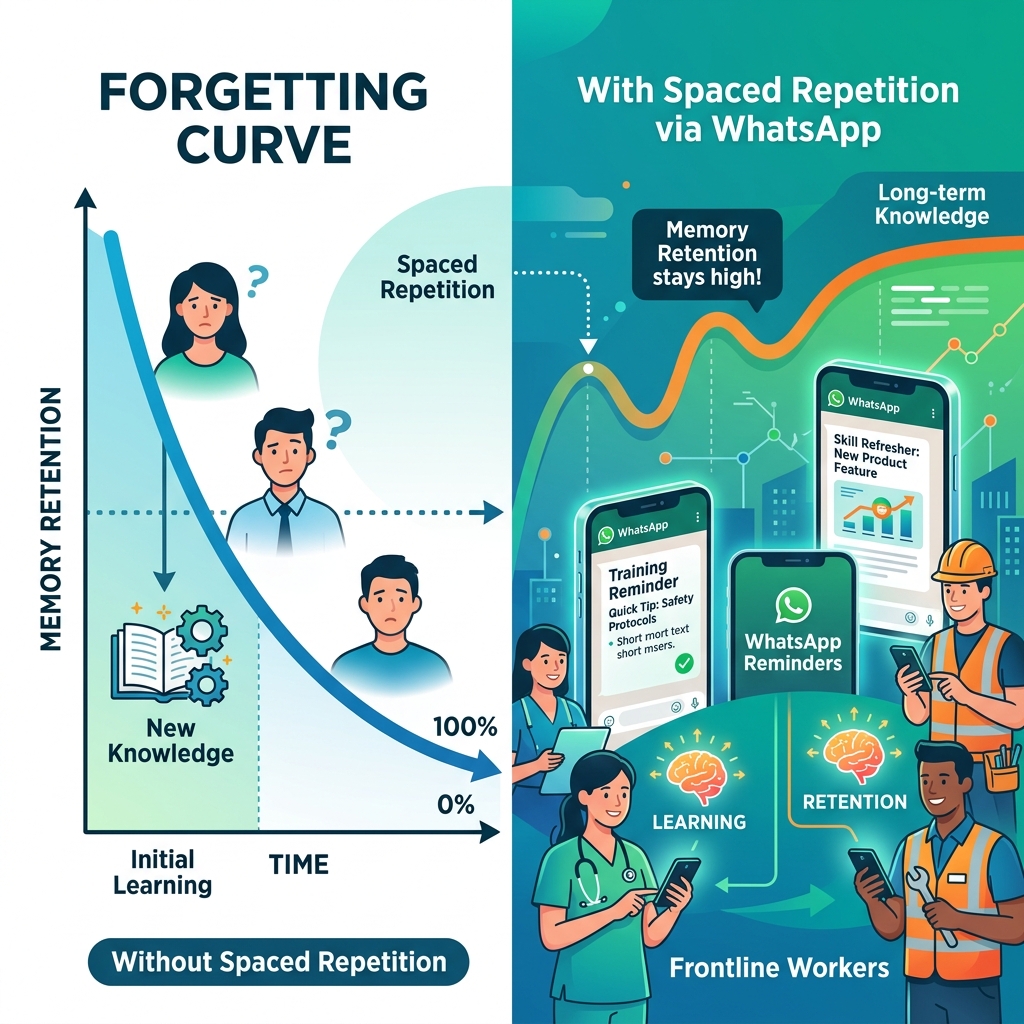
Reinforcement timing - Based on forgetting curve science, adaptive systems resurface critical information at precisely the intervals when the worker is most likely to forget it.
The Cognitive Science Behind Adaptive Microlearning
Spaced Repetition
Hermann Ebbinghaus demonstrated that people forget approximately 70% of new information within 24 hours. But when that information is revisited at strategic intervals - one day later, three days later, one week later - retention improves dramatically.
Adaptive systems track which concepts each worker has been exposed to and automatically schedule refreshers at optimal intervals.
Retrieval Practice
Simply re-reading information doesn't create strong memories. Being asked to recall information does. Adaptive microlearning embeds quiz questions, scenario challenges, and open-ended prompts throughout the learning path.
Zone of Proximal Development
Learning is most effective when the material is challenging but achievable - not so easy that the worker coasts, and not so hard that they disengage. Adaptive AI continuously calibrates difficulty based on the worker's performance.
Why Adaptive Microlearning Matters More for Frontline Workers
Vastly Different Skill Levels
Unlike a cohort of university graduates joining a consulting firm, frontline workers arrive with wildly varying educational backgrounds, prior experience, and skill levels. A one-size-fits-all module either bores the experienced workers or overwhelms the newcomers.
Multiple Languages
A single plant might have workers who are most comfortable in Hindi, Tamil, Bengali, and Marathi. Adaptive systems don't just translate content - they can adjust the complexity and register of language based on the worker's demonstrated comprehension level.
Related reading: Vernacular Training for India's Frontline: Why Regional Languages Beat English-Only Programs
Zero Time to Waste
Frontline workers have minutes, not hours, for training. Adaptive microlearning respects this constraint by never showing a worker content they've already mastered.
High Turnover Requires Fast Ramp-Up
Industries like retail, hospitality, and logistics face turnover rates exceeding 60% annually. Adaptive systems accelerate onboarding by identifying what the new worker already knows and fast-tracking past redundant basics.
Related reading: Reduce Frontline Attrition with Better Training: Data Guide
How AI Powers Adaptive Microlearning in Practice
Diagnostic Pre-Assessment
Before formal training begins, the system administers a brief diagnostic. This baseline reveals what the worker already knows and where the genuine gaps are.
Dynamic Content Paths
Based on diagnostic results and ongoing performance, the AI constructs a personalised learning path. A retail associate who already understands product categories but struggles with handling returns gets a content path weighted toward customer service scenarios.
Real-Time Difficulty Adjustment
If a worker consistently answers quiz questions correctly, the system increases complexity. If a worker is struggling, the system simplifies and offers different content formats.
AI Knowledge Support Between Modules
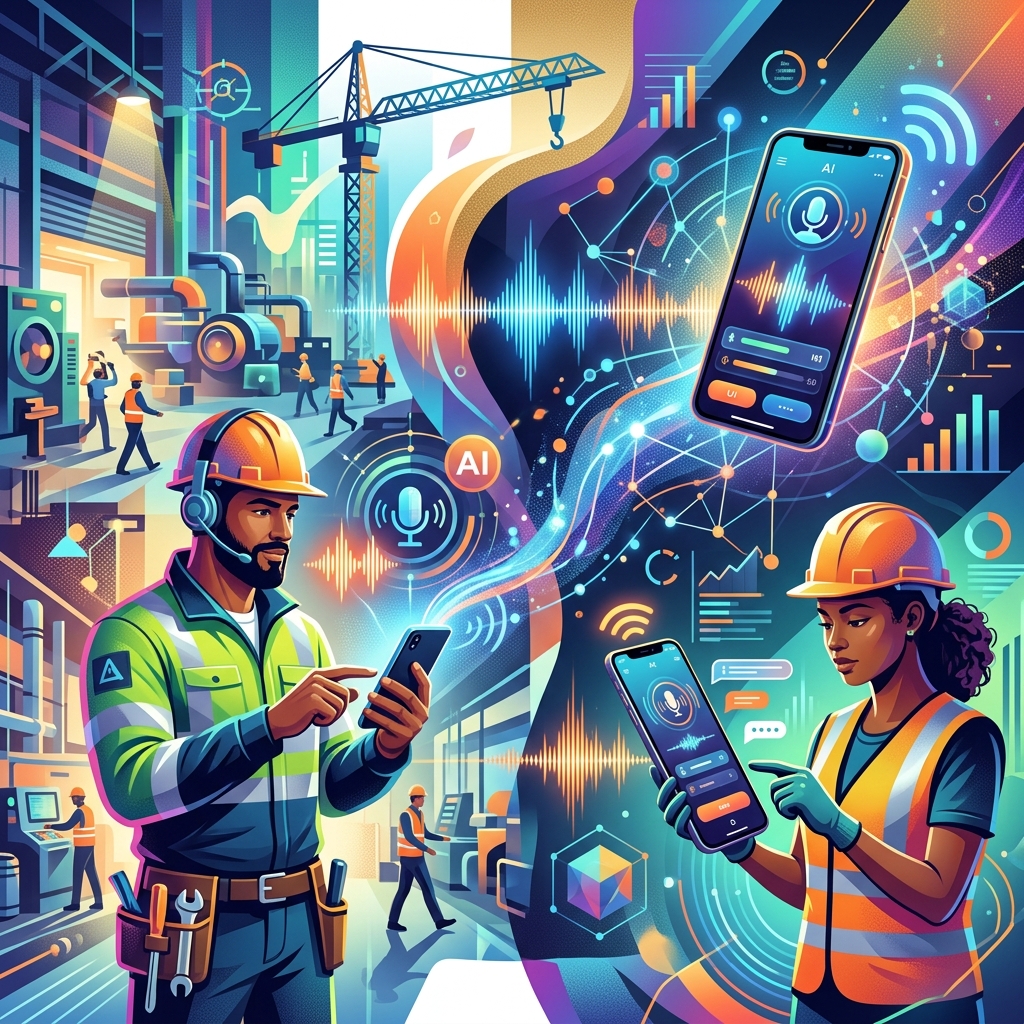
Training doesn't end when the module closes. Adaptive microlearning platforms that include AI knowledge assistants allow workers to ask follow-up questions after completing a module via a WhatsApp voice note and get an instant, cited answer from the company's own SOP.
Related reading: Agentic AI in Employee Training: Why Your LMS Needs to Start Talking Back
Adaptive Microlearning in Action - Industry Examples
BFSI - Personalised Product Training at Scale
A bank launches a new credit card product to 10,000 DSA agents. Rather than pushing the same 20-minute training to everyone, adaptive microlearning assesses each agent's baseline. Agents familiar with existing card products receive only the delta. Agents who are newer get the full product education path.
Manufacturing - Safety Training That Matches Experience
A cement plant has operators with 15 years of experience alongside fresh recruits. Adaptive microlearning doesn't waste the veterans' time on basic PPE training. Instead, it surfaces advanced hazard recognition scenarios while ensuring new operators build foundational safety habits.
Retail - Seasonal Product Updates
During festival season, retail chains need to rapidly train store associates on dozens of new SKUs. Adaptive systems prioritise training on the products relevant to each store's region and customer profile.
What to Look for in an Adaptive Microlearning Platform
Related reading: 10 Best Microlearning Platforms for Frontline Workers (2026)
The Bottom Line
Standard microlearning was a massive improvement over classroom training for frontline workers. Adaptive microlearning is the next evolution - training that's not just bite-sized and accessible, but genuinely tailored to each worker's knowledge state, learning pace, and job context.
With 49% of HR teams now using AI to personalise learning recommendations, the technology is no longer experimental. The question isn't whether adaptive microlearning works - it's whether your organisation is still delivering the same training to a warehouse veteran and a day-one hire and expecting both to benefit equally.
Ready to move beyond one-size-fits-all microlearning? Leap10x uses AI to convert your SOPs into personalised, adaptive training paths - delivered on WhatsApp in 70+ languages.
→ Start your free trial or book a demo to see adaptive microlearning in action.