Microlearning for Frontline Workers: The Complete Guide to Training That Actually Sticks
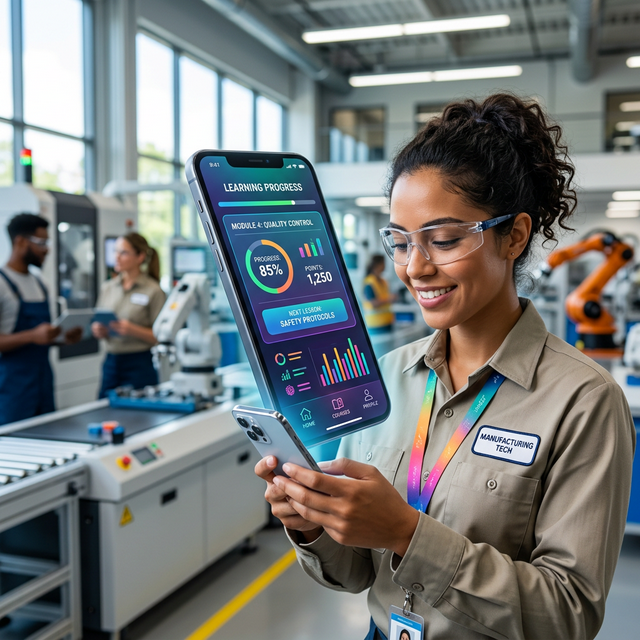
Your factory operator in Pune has six minutes between machine cycles. Your delivery rider in Hyderabad gets a five-minute gap while waiting for a pickup. Your retail associate in Chennai has a quick breather before the afternoon rush.
None of them have a laptop. Most don't have a company email address. And precisely zero of them are going to log into a corporate LMS portal to complete a 45-minute e-learning module.
Yet these are the people who determine whether your customers come back, whether your compliance audits pass, and whether your safety record stays clean.
This is why microlearning has become the default training strategy for forward-thinking organisations with large frontline workforces. Not because it's trendy - because it's the only approach that fits how these workers actually operate.
This guide covers everything you need to know about microlearning for frontline workers: what it is, why it works, how to implement it, and how to measure whether it's actually making a difference.
What Is Microlearning (And What It Isn't)?
Microlearning delivers training in short, focused modules - typically under five minutes each - designed around a single learning objective. Think of it as the difference between drinking from a fire hose and taking a sip of water exactly when you're thirsty.
Each module might be a short video, an interactive quiz, a visual flashcard, a scenario-based question, or an audio clip. The key is that it's consumable in the flow of work - during a shift change, a tea break, or while waiting for the next task.
What microlearning is NOT:
- It's not just chopping a two-hour course into 20 six-minute segments. That's still the same content, just sliced thinner.
- It's not a YouTube playlist. Unstructured video libraries don't create learning outcomes.
- It's not optional reading material. Effective microlearning is pushed to workers, tracked, and tied to performance objectives.
For frontline workers specifically, microlearning needs to be mobile-first, available in regional languages, and accessible without app downloads or corporate credentials. If your training requires a worker to remember a username and password, you've already lost half your audience.
Why Traditional Training Fails the Frontline
Before we go deeper into microlearning, it helps to understand why traditional training approaches consistently underperform for deskless workforces.
The time problem. Frontline workers don't have dedicated "learning hours." They're on the floor, on the road, or with customers. Pulling them into a classroom costs you productive hours and creates scheduling nightmares across shifts. Research shows that 65% of employees feel overwhelmed by the amount of information presented in a typical training course - and that number is higher for workers who aren't used to sitting through presentations.
The access problem. Approximately 83% of frontline workers don't have a corporate email account. Most don't have laptops. A traditional LMS that requires email-based login and desktop access is effectively invisible to this workforce. You might as well have printed the training on paper and left it in the CEO's office.
The language problem. A safety SOP written in English might tick a compliance box, but if your workforce in Tamil Nadu, Gujarat, or West Bengal can't fully comprehend it, you haven't trained anyone - you've just created documentation. Comprehension plummets when content isn't in a worker's native language.
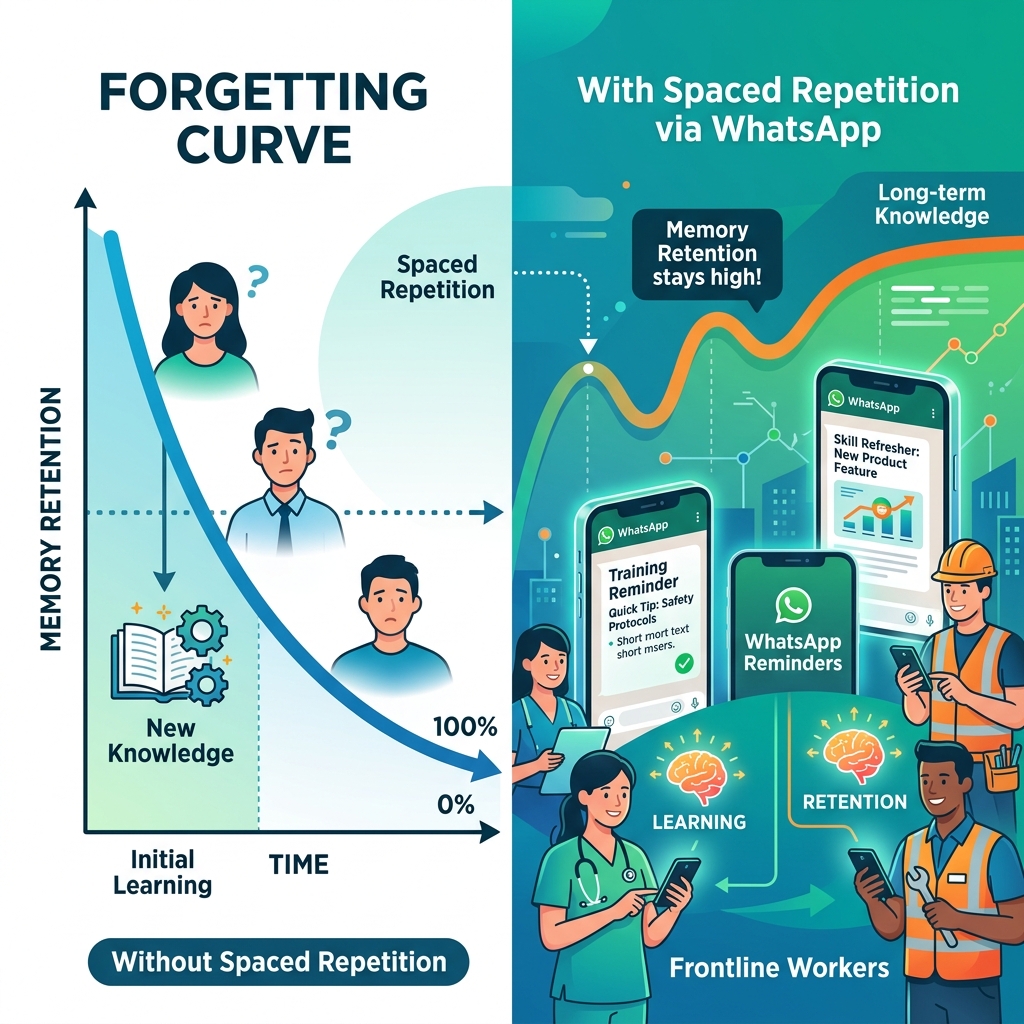
The retention problem. The forgetting curve - first documented by psychologist Hermann Ebbinghaus - tells us that people forget roughly 70% of new information within 24 hours. Hour-long training sessions create an illusion of learning, but without reinforcement, knowledge evaporates almost immediately.
These aren't minor inconveniences. They're structural problems that make traditional training fundamentally incompatible with how frontline work happens.
Related reading: Why Your LMS Will Never Solve Frontline Training (And What Actually Works)
The Science Behind Why Microlearning Works
Microlearning isn't just convenient - it's grounded in how the human brain actually processes and retains information.
Spaced Repetition Beats Cramming
When information is delivered in small doses over time, it triggers stronger long-term memory formation. Research shows microlearning is 17% more effective than traditional training methods. Rather than one marathon session, repeated short exposures build durable neural pathways.
Active Recall Strengthens Retention
Embedding quizzes and scenario-based questions within microlearning modules forces the brain to retrieve information rather than passively consume it. This retrieval practice is one of the most well-established techniques in learning science.
Reduced Cognitive Load
A single, focused learning objective per module means the brain doesn't have to sort through competing information. Workers learn one thing, understand it, and immediately apply it. Compare this to a 90-minute session covering safety, compliance, product knowledge, and company values all at once.
Completion Psychology
There's a powerful psychological effect in finishing something. A three-minute module that a worker completes gives them a sense of accomplishment. A 45-minute course that they abandon at the 12-minute mark teaches them that training is something you quit halfway through.
What Makes Microlearning Effective for Frontline Workers Specifically?
Not all microlearning is created equal. What works for a software engineer at their desk won't necessarily work for a warehouse operator or a hotel housekeeper. Here's what distinguishes frontline-ready microlearning:
WhatsApp and SMS Delivery (Not Another App)
The single biggest barrier to frontline training adoption is friction. Every additional step - downloading an app, creating an account, remembering a password - causes drop-off. The most effective frontline microlearning platforms deliver training through channels workers already use daily. In India and across emerging markets, that channel is WhatsApp.
With platforms like Leap10x, training arrives as a WhatsApp message. Workers tap a link and start learning immediately - no app store, no sign-up, no IT department involvement. This is why WhatsApp-delivered microlearning consistently achieves 85%+ completion rates compared to 20-30% for traditional LMS portals.
Related reading: WhatsApp Training vs. App-Based LMS: Which Works Better for Deskless Workers?
Vernacular Language Support
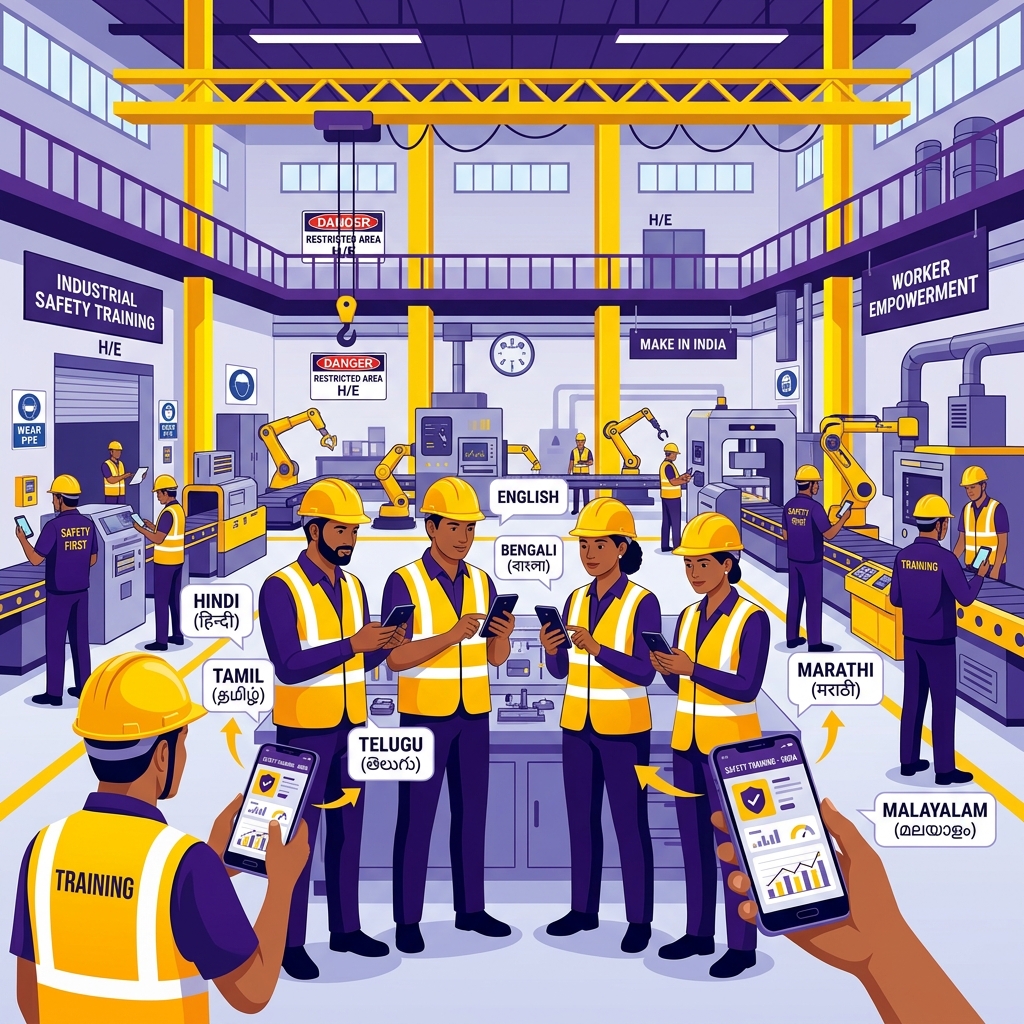
Training in a worker's mother tongue isn't a nice-to-have - it's the difference between genuine comprehension and box-ticking. Effective frontline microlearning platforms offer auto-translation into regional languages. A course authored once in English should deploy in Hindi, Tamil, Bengali, Marathi, and 60+ other languages without manual translation cycles.
Related reading: Vernacular Training for India's Frontline: Why Regional Languages Beat English-Only Programs
AI-Powered Content Creation
Most frontline L&D teams don't have a squad of instructional designers. They have existing PDFs, SOPs, and policy documents that need to become training. Modern microlearning platforms use AI to convert raw documents into structured, quiz-enabled micro-courses in minutes rather than weeks.
Related reading: AI-Generated SOPs for Manufacturing: How to Create Training Content in Minutes, Not Weeks
Visual and Interactive Formats
Frontline workers respond best to visual, story-driven formats - not walls of text. Think Instagram Stories-style cards: a short video, a key point, a quiz question, a summary. This format mirrors how people consume content in their personal lives, which makes training feel less like homework and more like scrolling.
Microlearning Use Cases Across Frontline Industries
Manufacturing
Daily toolbox talks on safety protocols, machine operation refreshers, and Lockout/Tagout procedures delivered before each shift. A three-minute module on proper PPE usage can prevent injuries that cost lakhs in compensation and downtime.
BFSI
Product knowledge updates for DSA agents, KYC compliance refreshers for branch staff, and RBI guideline training for recovery agents. When regulatory requirements change - and they change often - microlearning lets you push updated training to 15,000 agents in hours, not months.
Retail
New SKU launches, visual merchandising standards, and customer service scenarios. Retail associates can consume a quick product knowledge module before the store opens, then apply what they learned on the floor that same day.
Logistics
Driver safety modules, route protocol updates, and vehicle handling SOPs. Drivers can complete training during natural waiting periods without being pulled off the road.
How to Implement Microlearning for Your Frontline (Step by Step)
Step 1 - Audit Your Existing Content
You probably already have the raw material: SOPs, safety manuals, product catalogues, onboarding checklists. Identify the documents that frontline workers need to know, not the ones gathering dust on SharePoint.
Step 2 - Choose the Right Delivery Channel
Match the channel to your workforce's reality. If 90% of your workers use WhatsApp daily, delivering training through a separate app is fighting gravity. If they're in areas with unreliable internet, consider platforms that work on low bandwidth or even via standard cellular calls.
Step 3 - Start Small with One Use Case
Don't try to microlearning-ify your entire training catalogue on day one. Pick a high-impact use case - safety compliance, new product launch, or onboarding - and run a focused pilot with 50-200 workers. Measure completion rates, quiz scores, and gather worker feedback.
Step 4 - Measure What Matters
Track actual completion (not just logins), quiz performance, and where possible, tie training data to operational KPIs. Did the workers who completed the safety module have fewer incidents? Did the branch staff who finished the product training close more cross-sell deals?
Step 5 - Scale What Works
Once you've validated the approach with one use case, expand to other training needs. The beauty of AI-powered microlearning platforms is that scaling from 200 to 20,000 workers doesn't require 100x more effort from your L&D team.
Measuring Microlearning ROI
Learning expert Ray Jimenez, PhD, estimates that microlearning enables businesses to develop learning programs up to 300% faster while cutting development costs in half. But the real ROI comes from downstream operational improvements:
- Onboarding speed: Companies using microlearning for frontline onboarding report reducing time-to-productivity by 40-80%.
- Compliance incidents: Regular micro-refreshers keep safety and regulatory knowledge fresh, reducing violations and the fines that come with them.
- Attrition reduction: Workers who receive consistent, accessible training feel more invested in. Companies lose an average of $13.5 million per 1,000 employees every year due to insufficient training.
- Completion rates: Microlearning modules see 80%+ completion rates versus 20-30% for traditional LMS courses among frontline populations.
Related reading: How Investing in Workers Drives Business Growth
Choosing the Right Microlearning Platform for Your Frontline
Not every microlearning platform is built for deskless workers. When evaluating options, ask these questions:
Related reading: 10 Best Microlearning Platforms for Frontline Workers (2026)
The Bottom Line
Microlearning for frontline workers isn't a softer version of real training. It's a better-designed version that respects the constraints of frontline work: limited time, limited access, limited patience for clunky technology.
The organisations that are winning in frontline training aren't the ones with the biggest content libraries or the fanciest LMS dashboards. They're the ones who figured out how to deliver the right knowledge, in the right language, at the right moment, through the channel their workers actually use.
The microlearning market is projected to grow from $2.96 billion in 2025 to $5.49 billion by 2030. The shift isn't coming - it's already here. The question is whether your organisation will lead it or scramble to catch up.
Ready to see what microlearning looks like on WhatsApp? Leap10x converts your existing SOPs and PDFs into bite-sized, multilingual training modules your frontline will actually complete. No app downloads. No IT projects. Training goes live in 24 hours.