How AI Turns Your Company Knowledge Base into WhatsApp Training Courses Automatically
The biggest bottleneck in frontline training isn't delivery. It's content creation.
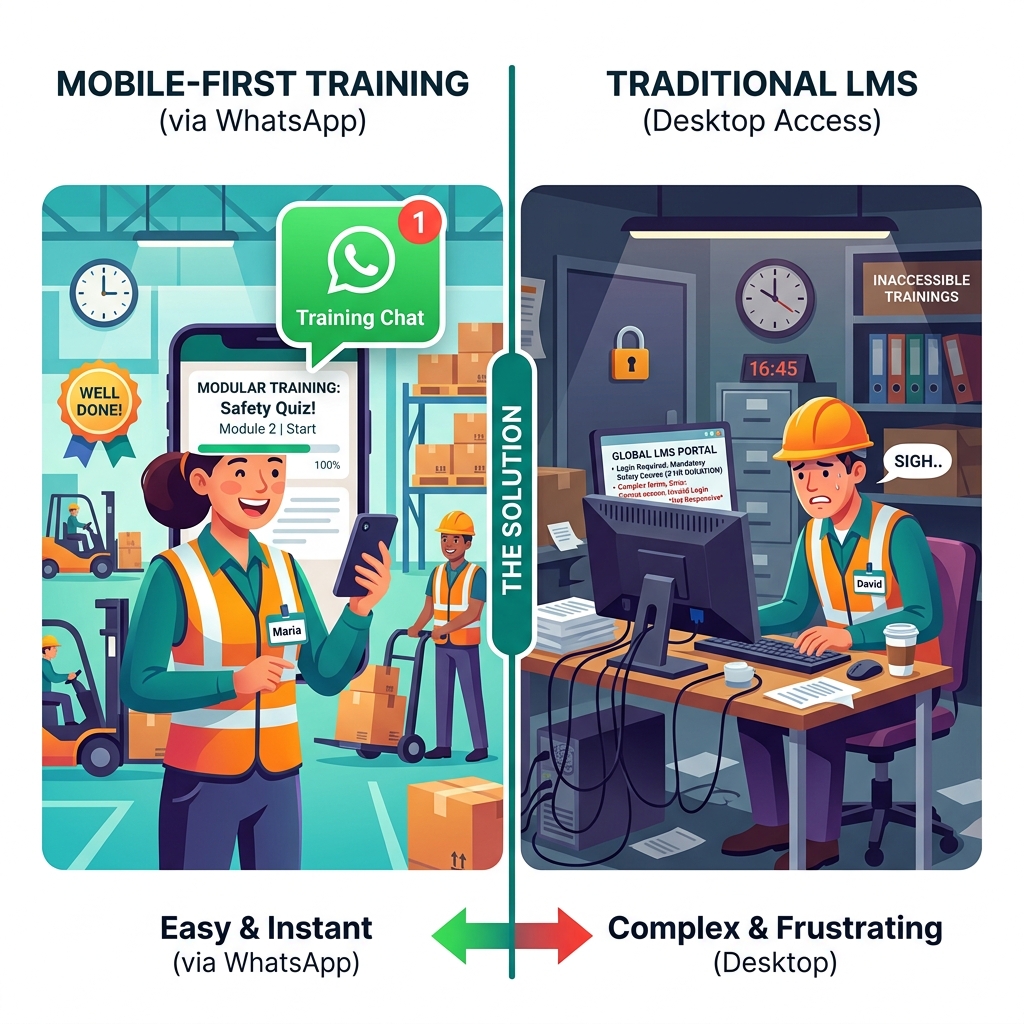
Ask any L&D team what slows them down most, and the answer is nearly always the same: turning subject-matter expertise into training content that frontline workers will actually engage with. The knowledge exists — in SOPs, product manuals, safety guidelines, process documents, and the heads of experienced employees. But transforming that raw knowledge into structured, engaging, mobile-friendly training takes weeks or months of instructional design work.
For most frontline-heavy organisations, this means training content is perpetually behind reality. By the time a new product training module is designed, reviewed, approved, and published, the product has been on shelves for weeks.
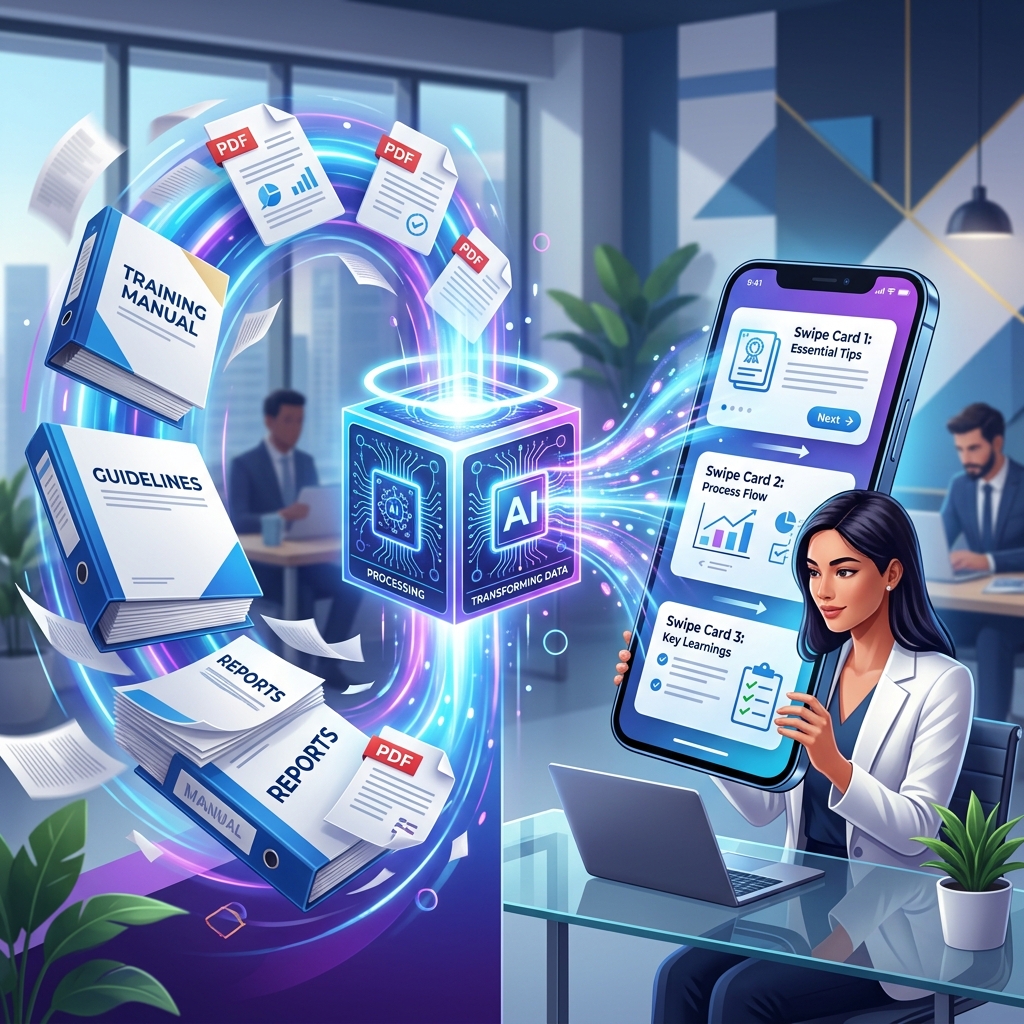
AI is closing this gap. Modern AI-powered training platforms can now take your existing company documents and automatically generate WhatsApp-ready microlearning courses — complete with knowledge checks, scenario questions, and structured learning journeys. What used to take an instructional designer two weeks now takes 30 minutes.
The Content Creation Problem
Traditional training content development follows a slow process: needs analysis, content gathering, instructional design, review and approval, then publication and delivery. Total timeline: 6-12 weeks from identified need to delivered training.
For industries where products change monthly, safety protocols update quarterly, and compliance requirements shift annually, this timeline is fundamentally inadequate.
How AI Content Generation Works
Stage 1: Document Ingestion
You upload existing materials to the AI platform — PDF manuals, SOPs, product specification sheets, safety guidelines, process flowcharts, FAQ documents, and policy memos. The AI reads and understands these documents, identifying key knowledge points, procedural steps, critical facts, and common scenarios.
Stage 2: Intelligent Extraction and Structuring
The AI doesn't just copy-paste sections. It:
- Identifies discrete learning objectives buried within lengthy documents
- Separates essential knowledge from contextual detail, prioritising what a frontline worker needs to know
- Reorganises content around job tasks rather than document structure
- Generates assessment questions that test comprehension of each learning point
- Creates scenario-based questions that test application, not just recall
- Structures content into a logical learning sequence that builds knowledge progressively
Stage 3: Review and Refinement
AI-generated content is a strong first draft, not a final product. The L&D team reviews the output, adjusts tone and language, adds company-specific examples, and ensures accuracy. This review process takes hours, not weeks.
What AI-Generated Training Looks Like
A 30-page food safety manual becomes 12 micro-modules organised into a 6-day learning journey — from temperature basics and storage to allergen management and compliance certification. Each module is 2-4 minutes long, written in conversational WhatsApp-friendly language, with embedded assessment.
Total human effort: upload the PDF, review the AI output, make adjustments. Roughly 30-60 minutes versus the weeks it would take to create this from scratch.
The Multi-Language Multiplier
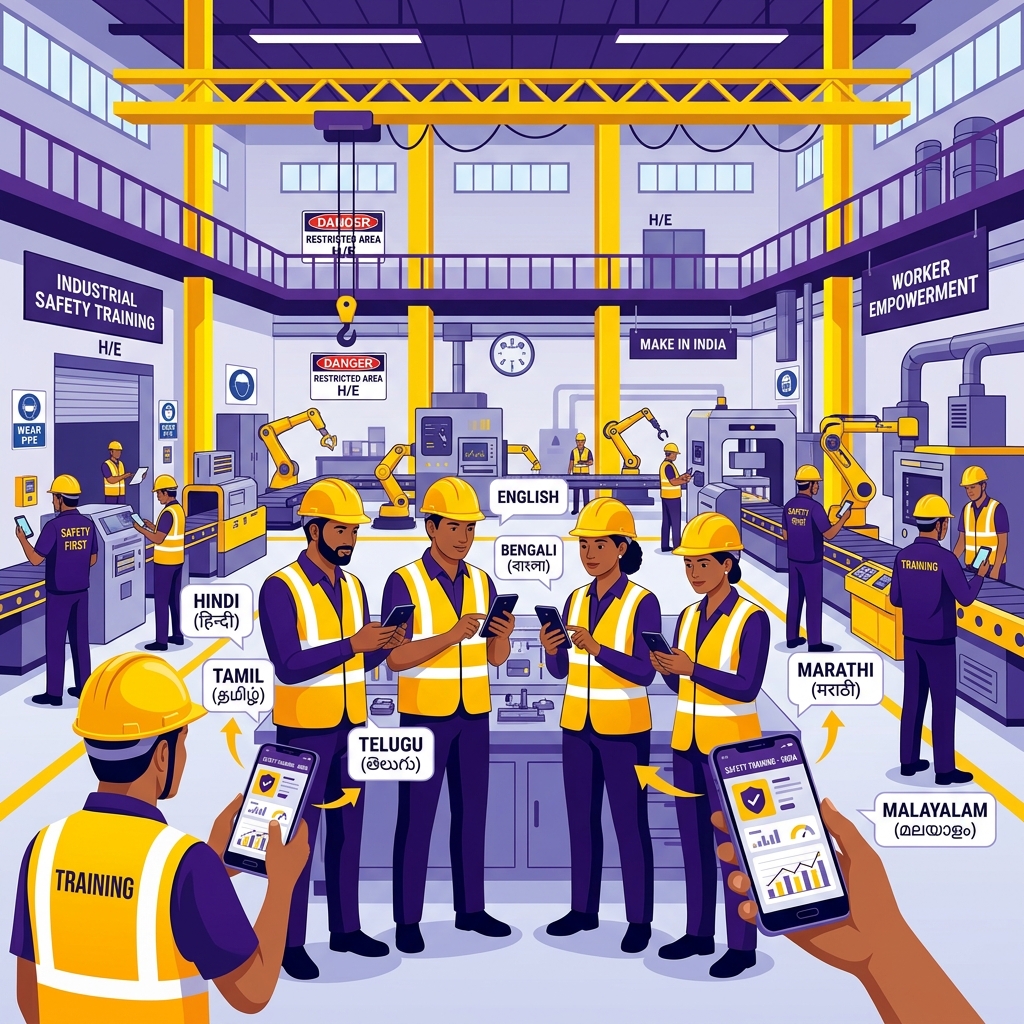
AI content generation delivers an additional advantage for linguistically diverse markets: automated translation. Training created in English can be automatically translated into Hindi, Tamil, Telugu, Kannada, Marathi, Bengali, and other languages — all from the same source content, with natural-sounding phrasing in each.
Quality Considerations
- Accuracy depends on source quality — AI can only extract what exists in your documents. Source documents must be current and accurate.
- Nuance requires human judgment — AI excels at factual and procedural content but is less reliable with culturally sensitive topics.
- Industry-specific terminology needs verification — subject-matter expert review remains important.
- Regulatory content demands precision — human experts should verify compliance content meets regulatory standards.
The bottom line: AI generates the first draft in minutes. Humans provide the final quality check in hours. The net result is dramatically faster time-to-delivery without sacrificing accuracy.
The Impact on L&D Teams
AI content generation doesn't eliminate L&D jobs — it transforms them. Without AI, L&D time splits roughly 70% on content creation and 30% on strategy and analysis. With AI, that ratio inverts: 30% on content review, 70% on strategy, impact measurement, and innovation.
Getting Started
- Gather your most-needed training materials
- Choose a platform with AI content generation supporting WhatsApp delivery
- Upload and generate — review the output carefully
- Refine and launch to a pilot group
- Iterate and expand systematically
The knowledge your frontline workers need already exists in your organisation. It's trapped in documents they'll never read. AI frees that knowledge and delivers it in a format that actually reaches, engages, and teaches your workforce.
Turn your training documents into WhatsApp courses in minutes. Leap10x's AI engine automatically converts PDFs, SOPs, and manuals into interactive microlearning — complete with quizzes, scenarios, and multi-language support. Upload your first document and see the results. Start a free pilot today.