EV Dealership and Service Technician Training: Keeping Up When the Product Changes Every Quarter
Quick answer
India's EV boom outpaces its training infrastructure. How OEMs train dealership sales staff and service technicians on fast-changing EVs via WhatsApp microlearning.
India's electric vehicle transition is happening faster than its training infrastructure. Two- and three-wheeler EVs are now mainstream in many cities, every major OEM has an electric portfolio, and software-defined vehicles get feature updates the way phones do. Meanwhile, the people who sell and service these vehicles - dealership sales executives, service advisors, and workshop technicians - learned their trade on carburettors and combustion.
The result is a knowledge gap with real consequences on both sides of the dealership:
- On the sales floor, an executive who can't confidently answer "what happens to range in Delhi summers?" or "what does the battery warranty actually cover?" loses the sale - or worse, wins it with a wrong answer that becomes a complaint.
- In the workshop, a technician who treats a 400V battery pack like a fuel tank is a safety incident waiting to happen. High-voltage systems demand new protocols, not adapted habits.
And the classic OEM training model - fly dealer staff to a regional training centre twice a year - was built for a world where the product changed every five years, not every quarter.
Why the training-centre model is losing the race
Product velocity. New variants, battery chemistry updates, charging ecosystem changes, OTA feature drops, revised subsidy rules (FAME/state EV policies) - the content changes monthly. A twice-yearly classroom cadence guarantees the network is perpetually out of date.
Network sprawl and attrition. OEM networks span thousands of touchpoints - dealerships, authorised service centres, multi-brand workshops - staffed by people the OEM doesn't employ, with dealership frontline attrition among the highest in retail. Every classroom cohort is partially obsolete (people quit) before the next cohort begins. This is the same extended-enterprise problem that plagues dealer networks everywhere.
Language. A pan-India network sells in Hindi, Marathi, Tamil, Telugu, Kannada, Gujarati, Bengali. OEM content is in English.
No verification layer. OEMs invest crores in training academies, then have no idea whether the sales executive in Indore who joined in March can answer the top ten customer questions. Mystery shopping samples; it doesn't measure.
The WhatsApp-first dealer network model
The fix isn't replacing hands-on technical training - high-voltage safety certification and physical workshop skills need physical instruction, full stop. The fix is moving the knowledge layer (which is 80% of the volume) onto a channel that reaches every person in the network, every week, in their language.
1. Product knowledge as a continuous drip
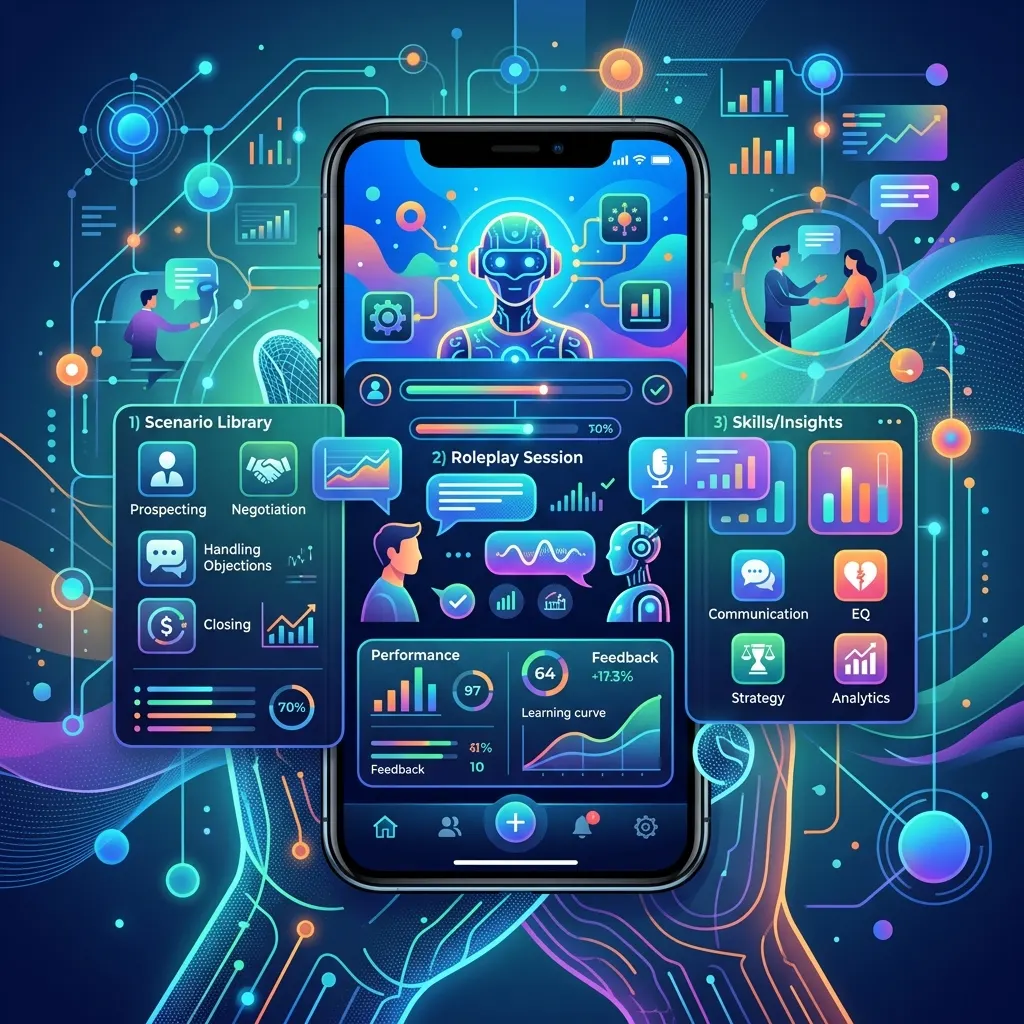
Every launch, variant, and update becomes a sequence of 2–3 minute modules - range and charging FAQs, spec comparisons versus rivals, subsidy math, warranty terms - pushed to sales executives on WhatsApp. AI converts the OEM's existing launch decks and spec sheets into these modules in minutes and translates them into 70+ languages in one click. The mechanics mirror our product knowledge playbook for retail.
2. Objection-handling drills for the EV-specific fears
Range anxiety, battery replacement cost, resale value, charging access, fire-safety headlines - EV selling is objection handling. Scenario quizzes and AI roleplay conversations let executives rehearse these conversations privately before testing them on customers.
3. Technician knowledge modules between certifications
For workshop staff: high-voltage safety refreshers (lockout, PPE, isolation verification), diagnostic-flow updates, recall and service-bulletin briefings, and torque-spec changes - delivered as visual, audio-first micro-lessons that a technician can review at the bay, with QR codes on equipment linking to the relevant module. Physical certification stays in the training centre; retention and updates live on the phone.
4. Same-day bulletins with proof of comprehension
When a service bulletin or a subsidy change drops, the network gets a 2-minute module with a quiz - and the OEM gets a dashboard showing which dealerships have verified comprehension, by person, by role, by region. That's network governance, not just training.
5. Zero-friction enrollment for a workforce you don't employ
Dealer staff churn constantly and aren't in the OEM's HRMS. Phone-number enrollment (or a QR at the dealership) makes every new joiner trainable on day one - no app rollout across 2,000 franchises, no licence procurement cycle. This is exactly where app-based dealer academies stall: the OEM buys licences, the dealership's staff never install the app, and completion sits at 20–30%. WhatsApp-native delivery is how Leap10x reports 85%+ completion across 75K+ frontline learners.
What OEMs and large dealer groups should measure
- Launch readiness: % of network sales staff quiz-verified before customer deliveries begin
- Knowledge scores by region and dealership - feeding field-team coaching visits
- Bulletin comprehension latency: time from release to 90% verified network comprehension
- New-joiner ramp: days from joining a dealership to passing the core curriculum (onboarding blueprint here)
- Correlations that justify budget: conversion rates and CSI/NPS at high-knowledge vs low-knowledge dealerships
EVs also raise the stakes on getting this right for a subtle reason: the first-time EV buyer asks more questions than any ICE customer ever did. The dealership that answers confidently wins a customer who evangelises; the one that fumbles feeds the anxiety narrative that slows the whole category.
FAQ
Q: Can safety-critical high-voltage training happen over WhatsApp?
Certification-level HV training must be hands-on and assessed physically. WhatsApp carries the surrounding 80%: pre-work theory, refreshers between certifications, protocol updates, and comprehension checks that flag who needs re-certification attention.
Q: We're a dealer group, not an OEM. Does this apply?
Directly - multi-brand dealer groups arguably need it more, since they juggle several OEMs' content. Build one training pipe; load every brand's curriculum into it.
Q: What about charging network and fleet operators?
Same model: field technicians, installation crews, and fleet drivers are all phone-first workforces. For fleets specifically, see our driver safety training playbook.
Call to Action
Your next EV launch is the natural pilot: run the launch curriculum to one region's dealer staff as a WhatsApp drip and measure quiz-verified readiness on delivery day one. Leap10x sets up in about 24 hours - book a demo at leap10x.in.
WhatsApp training
Run this training on WhatsApp instead
No app, no login, no password resets. Leap10x delivers courses, quizzes, and certificates in the chat your workforce already opens dozens of times a day — 85% average completion.