Product Knowledge Training for Retail Teams: How to Make Every Associate Your Best Salesperson
Quick answer
Shoppers now know more than your staff. Here's a product knowledge training system for retail: launch briefings, spaced quizzes, AI practice, and floor support.
The modern shopper walks in having watched three review videos, compared prices on two apps, and read the spec sheet. Then they ask your floor associate a question - and in that moment, your store either justifies its existence or becomes a showroom for someone else's website.
Product knowledge is the last unfair advantage physical retail has. A confident answer about which washing machine suits a hard-water area, which running shoe fits an overpronator, which face serum layers with what - that's what converts a browser, upsizes a basket, and builds the trust that brings a customer back. Retailers know this. What they lack is a system for keeping thousands of associates current across hundreds of SKUs that change every season.
The traditional toolkit - launch-day huddles, printed spec binders, a brand trainer visiting quarterly - can't keep pace. Here's the system that can.
Why product knowledge decays so fast in retail
- Assortment velocity. New SKUs monthly, seasonal resets, exclusive variants - in categories like electronics and beauty, a quarter of what's on shelf may be new since the last formal training.
- Attrition. Store staff turnover in India routinely runs high enough that on any given day, a large share of your floor never attended the launch briefing. (Attrition itself is trainable, but that's another post.)
- The cascade problem. Brand → category head - area manager → store manager → associate: each hop loses fidelity. By the last hop, "inverter compressor with 10-year warranty" has become "it's a good fridge."
- Binders don't answer questions. Product info stored in a back-office folder is unavailable at the exact moment it's needed: on the floor, mid-conversation.
The system: brief, quiz, practice, support
1. Launch briefings that reach every associate the same morning
When a product launches, the brand deck already exists. Leap10x's AI converts that deck or spec PDF into a swipeable micro-lesson - hero features as video cards, the "who is this for" story, the two objections shoppers will raise, a 5-question quiz - in minutes. It lands on every associate's WhatsApp before the shutters open, in their language (70+ supported, one click). No cascade, no dilution, no waiting for the trainer's store visit. Multi-location chains use this to make 500 stores sound like one brand.
2. Spaced quizzes that keep knowledge warm
One briefing doesn't survive a month of shifts. Short quizzes return at intervals - the two specs everyone forgets, the comparison against the bestselling rival SKU - so knowledge stays retrieval-ready. Scores by store and region show the category team exactly where the message didn't land, while nudges quietly bring back associates who stalled mid-course. This is how completion holds at 85%+ instead of the 20–30% typical of app-based retail training.
3. Practice the pitch, not just the specs
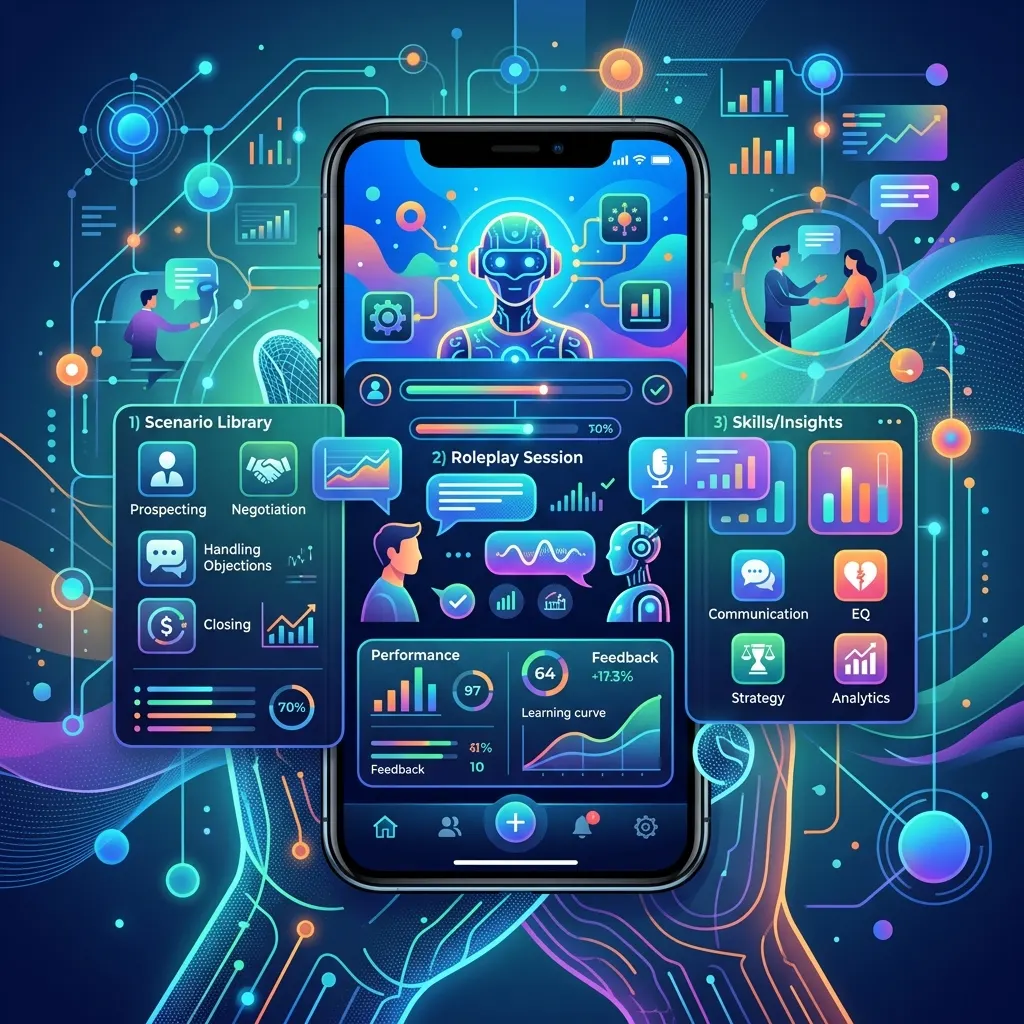
Knowing the spec sheet isn't the same as handling "why is this ₹4,000 more than the one online?" With AI roleplay, associates rehearse against AI shopper personas - the price-anchored comparer, the confused first-timer, the expert tester - over chat or voice, and get scored on need-discovery, feature-to-benefit translation, and the close. Managers see who needs coaching before the weekend rush, not after the lost sales. (More on the method: microlearning for frontline sales teams.)
4. Floor support: the answer at the moment of need
Training covers the predictable questions; the floor produces unpredictable ones. With Leap10x Assist, an associate types "does the X200 support 4K at 120Hz?" into WhatsApp and gets the answer from your product documentation in seconds - mid-conversation, without walking to the back office or guessing. Every question asked also tells the category team which information gaps to train next. It's the same pattern that's replacing HR helpdesks for deskless teams, pointed at product instead of policy.
What to measure (and show the CFO)
- Quiz scores vs conversion rate by store - the cleanest link between knowledge and revenue.
- Attach rate and average bill value where accessory/add-on modules ran vs where they didn't.
- Time-to-competence for new hires - days until a new associate passes the category quiz.
- Mystery-shop scores on product questions, before vs after.
- Assist query themes - the questions your floor can't answer are next month's training calendar.
Retailers running this loop consistently find the same thing: the gap between their best store and their median store is mostly an information gap - and it closes fast when every associate gets the same briefing, the same morning, in their own language.
Getting started: one category, one region
Don't boil the assortment. Pick one high-margin, high-consideration category (large appliances, athletic footwear, skincare), one region, and next month's launch calendar. Run briefing + quiz + roleplay for four weeks and compare conversion and attach rate against a control region. The pilot needs no app rollout and no IT project - associates enrol from a link, and the first course can be live about 24 hours after you upload the deck.
Call to Action: Bring one product deck to a free 30-minute demo - we'll turn it into a floor-ready WhatsApp course before the call ends. Or start free and brief one store team this week.
WhatsApp training
Run this training on WhatsApp instead
No app, no login, no password resets. Leap10x delivers courses, quizzes, and certificates in the chat your workforce already opens dozens of times a day — 85% average completion.