Gamified Learning for Frontline Workers: Why Game Mechanics Drive Completion
Quick answer
Typical LMS course completion rates for frontline workers hover between 20-30%.
The Completion Rate Problem
Typical LMS course completion rates for frontline workers hover between 20-30%. The problem is not laziness - it is that training feels like punishment rather than progress. Gamification offers a different psychology: instead of "you must complete this," it says "can you beat this?"
Game Mechanics That Work for Frontline Teams
Points and Progress Tracking
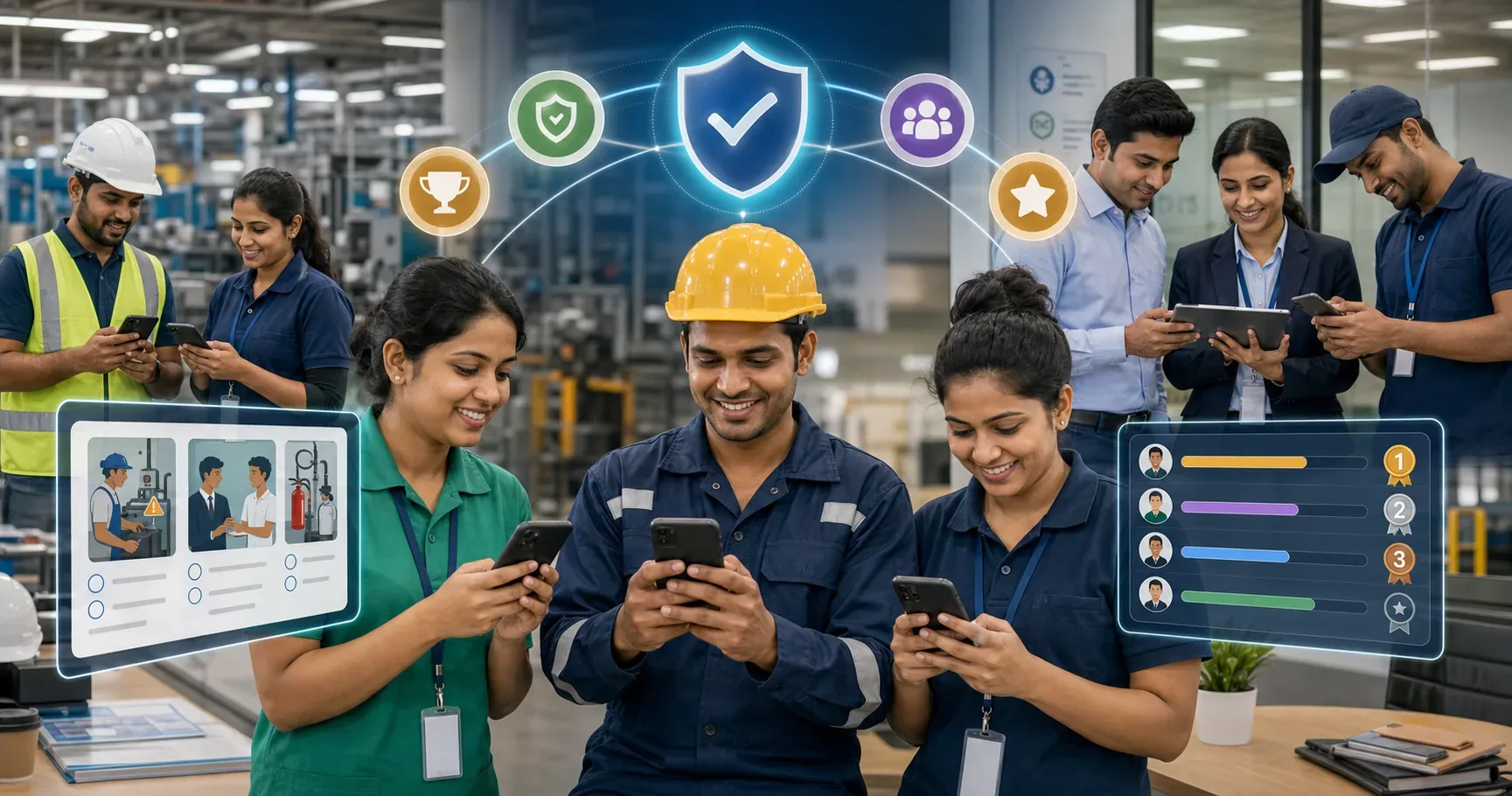
Workers see their accumulated training points, creating a sense of momentum. Progress bars motivate completion.
Leaderboards
Friendly competition between teams, shifts, or locations drives engagement. Team-level leaderboards avoid singling out individuals while creating positive peer pressure.
Badges and Achievements
Visual recognition for completing milestones taps into a deep human desire for recognition and accomplishment.
Streaks
"You have completed training for 5 consecutive days!" Streak mechanics encourage daily engagement and habitual learning behavior.
Challenges and Quests
Frame training modules as challenges with time limits to create urgency without the punitive feeling of deadlines.
Instant Feedback
Immediate responses to quiz answers keep workers engaged in a way that delayed grading cannot.
Why Gamification Works Especially Well for Frontline Workers
Short attention windows. Game mechanics are designed for short interactions.
Competitive cultures. Many frontline environments already have competitive cultures. Gamification channels that energy toward learning.
Immediate gratification. Frontline workers are accustomed to seeing immediate results of their physical work.
Social connection. Team-based gamification creates shared experiences that build social fabric and improve retention.
Implementing Gamification Without Trivializing Training
Tie rewards to knowledge, not just completion. Points should be weighted by quiz accuracy.
Make leaderboards team-based. Individual leaderboards can create anxiety. Team competition fosters collaboration.
Keep rewards appropriate. The reward should feel meaningful without distorting behavior.
Connect gamification to real outcomes. When gamified safety training correlates with reduced incidents, share that data.
Gamification Across Training Types
| Training Type | Gamification Approach |
|---|---|
| Safety | Challenge-based: "Complete the Safety Challenge with 90%+ accuracy" |
| Product knowledge | Quiz battles between store teams |
| Onboarding | Progress-based: "Unlock your Day 5 Badge" |
| Compliance | Streak-based: "Maintain your compliance streak" |
| Sales skills | Leaderboard: "Top sellers also completed the most training" |
Measuring Gamification Impact
Track completion rates, time to completion, quiz scores, voluntary participation, and business outcomes before and after implementing gamification.
Gamify Your Frontline Training with Leap10x
Leap10x combines microlearning delivery via WhatsApp with gamification elements that drive completion. Workers earn progress, compete with peers, and receive instant feedback - all within the WhatsApp interface they already know.
Make training engaging with Leap10x →
The best training program is the one workers actually finish. Gamification does not make training easy - it makes it engaging.
Microlearning
Turn your SOPs into 3-minute modules
Upload a PDF, deck, or video and Leap10x's AI builds micro-modules with quizzes and spaced-repetition schedules — delivered where your frontline already is.