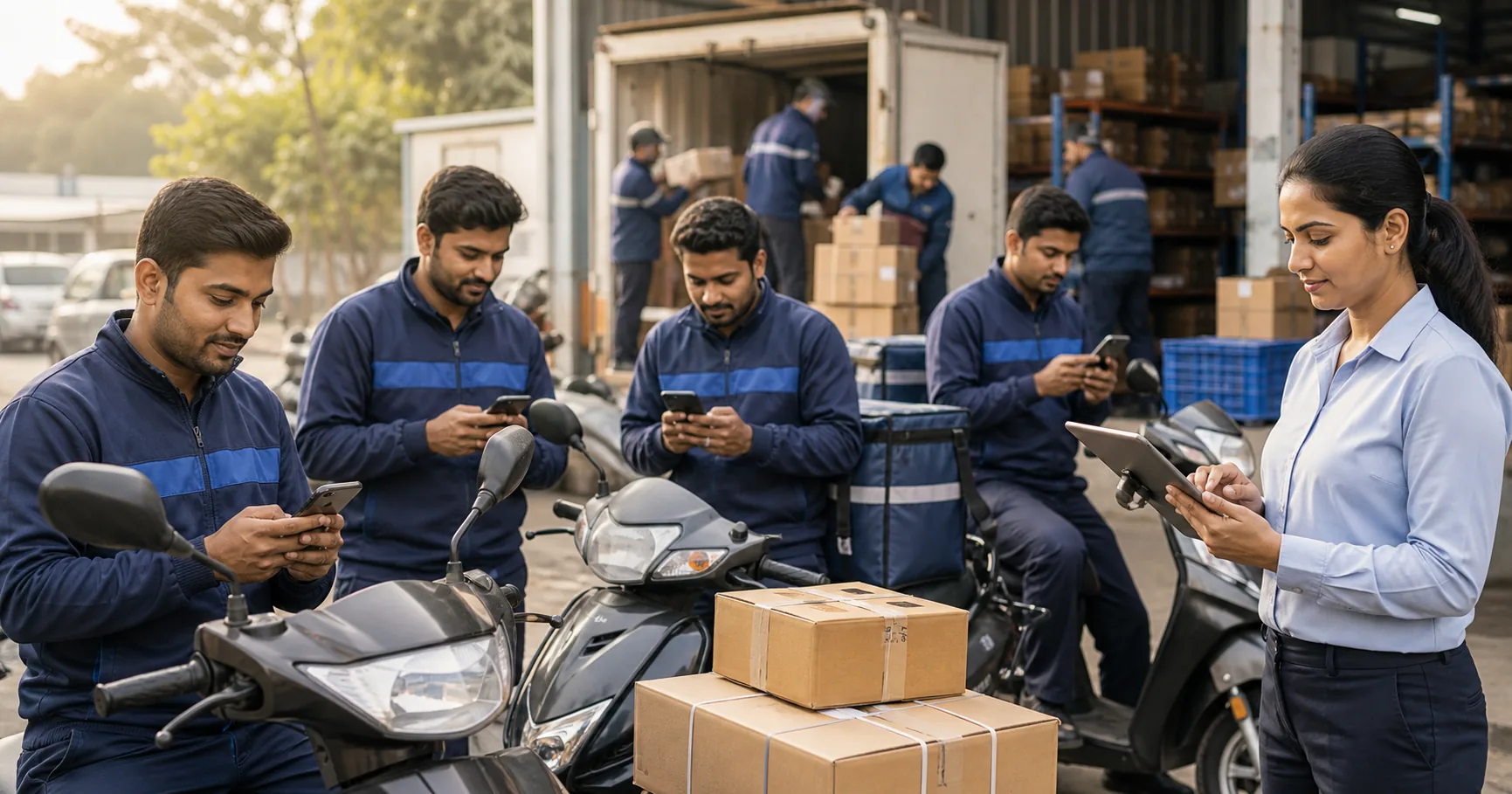
Best Microlearning for Logistics and Warehouse Staff

Quick answer
Walk into most warehouses and you will find the same training setup: a laminated poster on the wall, a binder nobody reads, and an annual safety refresher…
Why Warehouse and Logistics Training Is Stuck in the Past
Walk into most warehouses and you will find the same training setup: a laminated poster on the wall, a binder nobody reads, and an annual safety refresher that workers attend because they have to, not because they want to.
The logistics industry moves millions of packages daily, operates 24/7 across multiple shifts, and employs some of the highest-turnover workforces in any sector. Yet training infrastructure has barely evolved in two decades.
Here are the numbers that should worry logistics leaders: warehouse employee attrition rates often exceed 40% annually. The average cost of a workplace injury in a warehouse setting runs into lakhs. And most warehouse workers receive formal training only during onboarding - after which they are expected to remember everything perfectly.
Microlearning offers a way to solve this without building classrooms inside warehouses.
Core Training Challenges in Logistics
Geographic dispersion. Warehouses, distribution centers, and delivery hubs are scattered across regions. Centralizing training is impractical.
High turnover. Logistics relies heavily on contract and seasonal workers. Training must be fast enough to keep pace with constant workforce churn.
Multilingual teams. A single warehouse in India might employ workers speaking Hindi, Telugu, Tamil, and Marathi. Training in one language leaves others behind.
Limited technology access. Workers do not have company devices. Personal smartphones with limited storage are often the only option.
Physical work environment. Workers are on their feet, operating forklifts, managing inventory, and loading trucks. They cannot sit at a computer for training.
Microlearning Use Cases for Warehouse and Logistics
Safety Training
Forklift operation, proper lifting techniques, hazmat handling, fire safety procedures. Deliver two-minute video modules showing correct procedures. Push refreshers monthly. Track completion for OSHA and internal compliance.
SOP Training
Stacking protocols, inventory management procedures, order picking accuracy. When a process changes, deploy an updated micro-module the same day. Workers receive it on WhatsApp and complete it before their next shift.
New Hire Onboarding
Contract workers arriving for a seasonal surge need to be productive within days, not weeks. A structured microlearning sequence covering facility layout, safety basics, role responsibilities, and key procedures gets them started fast.
Compliance Training
Environmental regulations, waste management procedures, hazmat certifications. Microlearning provides documented proof of training completion - something auditors need and paper sign-in sheets struggle to provide reliably.
Driver Training
Delivery drivers need training on route optimization, customer interaction, vehicle safety, and handling procedures. Since drivers are always on the move, WhatsApp-based micro-modules are the only practical delivery channel.
Results from the Field
A mobility and logistics company trained their high-turnover workforce using microlearning, achieving:
- 23% improvement in onboarding time
- 10% reduction in onboarding cost
- 3% improvement in customer satisfaction scores
Another logistics operation used microlearning for sustainability training, achieving a 20% reduction in waste generation over three years by educating workers on proper waste management and recycling practices through bite-sized mobile modules.
Choosing a Microlearning Platform for Logistics
No-app delivery is critical. Warehouse workers will not download a training app. Period. Look for platforms delivering via WhatsApp, SMS, or QR codes.
Vernacular language support is non-negotiable. If your workforce is multilingual, your platform must support their languages.
Offline capability matters. Not all warehouse locations have reliable internet. Modules that can be downloaded and completed offline ensure training reaches everyone.
Visual content creation. Video and image-based modules resonate better than text for physical work procedures. Choose a platform that makes visual content easy to create.
Completion tracking. Warehouse managers need to see exactly who has completed what. Real-time dashboards beat spreadsheets every time.
Implementation Roadmap
- Identify your top three training needs. Usually: safety, onboarding, and SOP updates.
- Convert existing materials. Upload safety manuals, SOPs, and process guides. AI tools convert them into micro-modules.
- Pick delivery channels. WhatsApp for individual delivery. QR codes at workstations for on-demand access. SMS for workers with basic phones.
- Pilot with one facility. Run for 30 days. Measure completion rates, safety incidents, and onboarding speed.
- Scale across facilities. Standardize content. Localize language. Deploy to all locations.
How Leap10x Supports Logistics Training
Leap10x delivers microlearning to logistics and warehouse staff through WhatsApp - the channel workers already use daily. Upload your training materials, and AI converts them into regional-language micro-modules that workers complete in minutes.
No app. No login. Completion tracking for every worker across every facility.
See how Leap10x trains logistics teams →
Start with safety training. It has the clearest ROI, the strongest compliance argument, and the most immediate impact on your workforce. Everything else follows.
Microlearning
Turn your SOPs into 3-minute modules
Upload a PDF, deck, or video and Leap10x's AI builds micro-modules with quizzes and spaced-repetition schedules — delivered where your frontline already is.