The Frontline AI Champions Program: How 50 Workers Can Carry AI Literacy to 5,000
Every frontline workforce has an informal information network, and it's faster than yours. News about the new attendance system reached the night shift before the official memo did - slightly wrong, heavily editorialized, and completely believed.
An AI champions program is a decision to work with that network instead of competing against it: select respected workers, make them genuinely AI-literate first, and let credibility flow through the channels rumor already owns. It's the highest-leverage move in workforce AI adoption - and one of the cheapest.
Why peer champions outperform corporate programs
- Credibility asymmetry. A line operator saying "the alert system saved my Tuesday" beats ten leadership emails, because she has no incentive to oversell and everyone knows it. This is exactly the lever for AI anxiety, which official reassurance structurally can't reach.
- Translation. Champions convert training-speak into shift-speak - and into the local language, idiom, and machine names that generic content misses.
- Always-on presence. A trainer visits quarterly; a champion is on the shift when the question arises at 2 a.m.
- Upward signal. Champions hear the real objections and rumors first - your early-warning system for what the pulse survey will show a month later.
Selecting champions: respect over rank
The classic mistake is appointing supervisors. Some are right; many carry authority without peer trust - and the point is trust. Better selection signals:
- The person others already ask when something breaks (every shift has one)
- Early adopters with patience - enthusiasm without condescension
- Mix of tenure: a respected veteran converts the skeptics no youngster can
- Coverage math: aim for roughly 1 champion per 50–100 workers, per shift, per site - night shift explicitly included (it always gets forgotten)
- Volunteers over conscripts - but invite personally; the best candidates rarely self-nominate
Training the champions: two levels deeper
Champions need more than the standard curriculum - they need to handle the questions the curriculum provokes:
- Full AI literacy foundation - the same 30-day micro-course everyone gets, completed first, with top scores verified
- The 'why' layer - how the specific systems on their floor work, what data feeds them, what they optimize; champions who can explain why the vision system errs on glossy parts earn trust that scripts can't
- The hard questions drill - AI roleplay practice against the real objections: "is this watching me for appraisals?", "will they cut headcount?", "why should I feed it accurate codes?" - with honest company answers agreed in advance. A champion caught without an answer, or worse with a dishonest one, is a program-ending event
- Boundary training - what champions don't do: they're not policy owners, not disciplinarians, not tech support for payroll. Clear lanes protect their peer standing
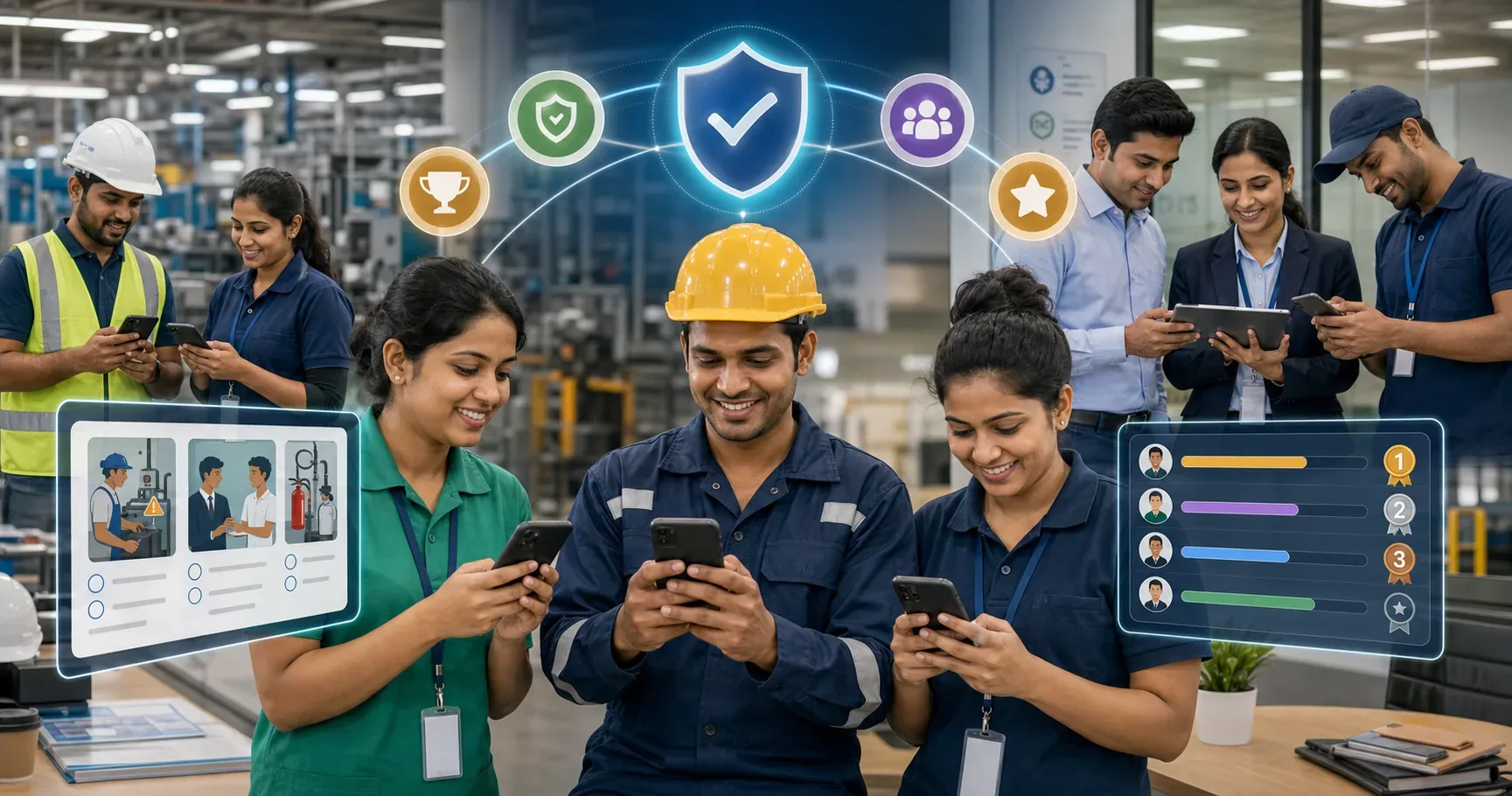
Deliver all of it the way champions will deliver theirs: 3-minute lessons on WhatsApp, in their language, between shifts - with a private champions' channel for questions, escalations, and mutual support.
Running the program: rhythm and recognition
- Weekly champion brief: one 2-minute update (what's rolling out, what rumor to correct, this week's talking point) pushed to the champions' channel every Monday
- Monthly ask-me-anything loop: champions submit the questions they couldn't answer; the answers become next week's workforce micro-lesson - your curriculum starts writing itself from real demand
- Visible recognition: certified-champion status, a badge that means something, first access to new tools, and a direct line to the program owner. For many frontline workers this is the first formally recognized expertise of their career - don't underweight it
- Measure the delta: compare adoption, data quality, and literacy-assessment scores between championed and unchampioned sites for one quarter. That gap is the program's budget justification, and it's usually decisive
The compounding effect
A champions program started for AI adoption quietly becomes infrastructure: the same trusted network carries the next safety campaign, the next system rollout, the next engagement push. You built a human API to the frontline - AI was just the first payload.
Call to Action
Fifty credible voices beat five thousand licenses. Book a Leap10x demo - we'll set up your champions' training track and the workforce program behind it, all on WhatsApp, in one working session. Request a demo →